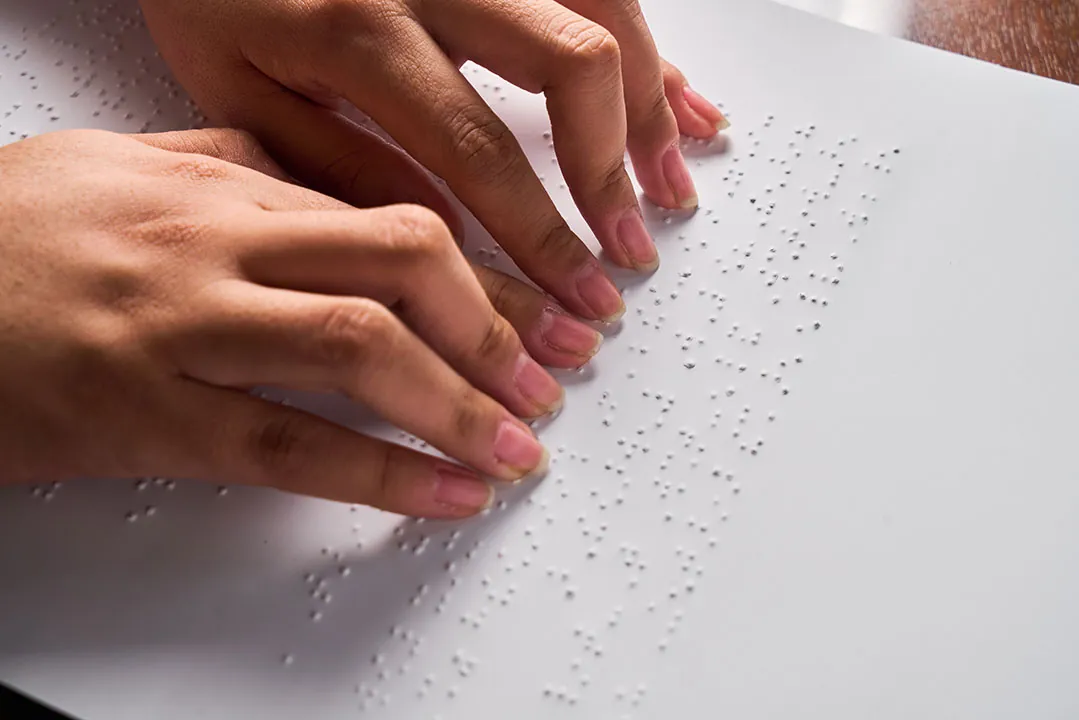
The history of braille dates back almost 200 years. It’s traced back to its namesake, Louis Braille, a 19th century intellect who lost his sight as a child and created a touch-based reading system that used raised dots. Today, braille remains a critical form of communication for people with vision loss and blindness.
How has braille changed over the past 200 years?
At its inception, braille was largely used to convert printed books and documents into accessible formats for individuals with vision impairments. With time, the writing system continued to change and develop, allowing for improved access to various forms of writing. Some modern braille technologies include:
-
Refreshable braille displays
A refreshable braille display is an electronic device that converts digital texts into braille by using pins that move up and down. They are often used in conjunction with screen readers and will continuously refresh as an individual moves their cursor through the page.
-
Braille notetakers
A modern braille notetaker usually combines speech synthesisers, refreshable braille displays, and, occasionally, braille keyboards to create a device that allows users to read, write, and access digital texts independently. These devices are often a crucial tool for students who are low vision or blind, as it can allow them to read textbooks, take class notes, and access content from online classrooms.
-
Braille E-readers
Similar to how e-readers allow people to read books in a digital format, braille e-readers allow people to read digital books in braille. Braille e-readers offer an accessible and portable alternative to carrying weighty hard-copy braille books.
-
Mid-Air Haptic Interfaces
One of the newest developments in digital assistive technology for visually impaired people, mid-air haptic interfaces build upon the braille system but instead of using raised bumps to communicate, it uses ultrasound waves that project tactile sensation onto hands. Sensors are used to recognize when someone’s hands are above the interface, and project sensation directly onto skin for reading. Research from the 2020 ACM Designing Interactive Systems Conference shows 88% reading accuracy by blind participants.
The Importance of Braille in Today’s Technological Landscape
As braille continues to develop alongside other assistive technologies, it continues to be a key component in literacy development amongst visually impaired people. Braille offers people with low vision and blindness a way to understand fundamental concepts like spelling, punctuation, grammar and syntax that screen readers and audiobooks cannot teach.
As a vital form of communication and knowledge among people with vision impairment, providing educational content in braille format is essential. Panorama’s Alternative Formats Menu allows students to export documents in both a Braille Ready File format and a United English Braille format, helping educators meet the accessibility needs of their students.
200 years later, braille assistive devices have come a long way. As assistive technology continues to advance, new paths are being paved toward a future of greater accessibility and inclusion.