


-

How Micro-Assessments Support Continuous Learning
Recent research supports these benefits. A 2024 study on practice testing in a massive open online course found that frequent, low-stakes checks combined with timely feedback improved learners’ performance and persistence Micro-assessments build on established...
Read more
-

How Text-to-Speech Strengthens Accessibility Compliance
While captions, transcripts, and document remediation often take center stage, audio alternatives like text-to-speech (TTS) are frequently overlooked. As regulatory expectations evolve, especially with Title II requirements approaching in April 2026, TTS can play an...
Read more
-
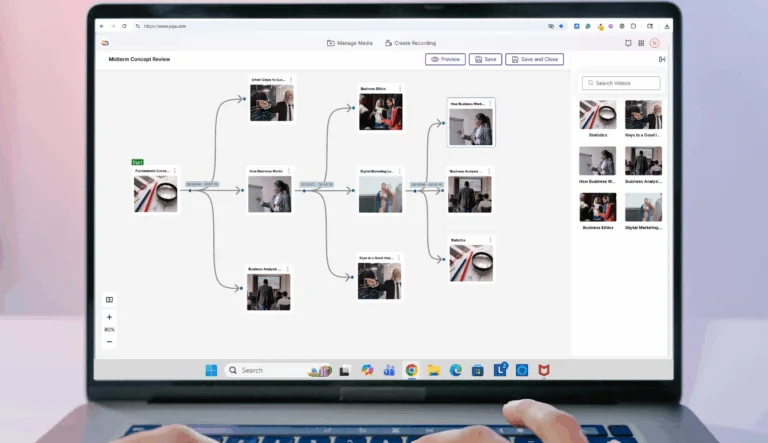
How Video Branching Improves Learning Outcomes
Video’s ability to strengthen knowledge transfer and make learning more accessible is well-documented. But what if students could shape their learning experience by making choices that determine what content they see next? Interactive video branching...
Read more
-

How Regular Website Audits Improve Accessibility and Performance
Maintaining an effective website is an ongoing activity. Regular, structured website audits can help provide the strategic insight needed to keep digital properties aligned with institutional goals and user needs. What do Website Audits Evaluate? ...
Read more
-

What is Sentiment Analysis in Education? A Primer for Instructors and Administrators
Research shows that teaching presence, or the way instructors design, communicate, and facilitate learning, has a direct impact on student satisfaction and perceived learning. That’s where sentiment analysis comes in. Sentiment analysis is a branch...
Read more
-

How Video Chaptering Supports Learning in Higher Education
Video chaptering helps break down content into manageable segments, making it easier for students to find, revisit, and absorb the information they need most. Video Chaptering Benefits Students and Instructors Research shows that structured video...
Read more
-

5 Ways to Bridge the Student Technology Expectation Gap
The report outlines six aspects of the student experience in higher education, including satisfaction with technology-related services and supports; modality preferences; hybrid learning experiences; generative AI in the classroom; workforce preparation; and accessibility and mental...
Read more
-

5 Ways Video Feedback Enhances the Learning Experience
Video feedback on student assessments can help create more engaging, effective learning experiences in a variety of ways: 1. It combines visual and auditory feedback: Research shows that students absorb and retain information better when...
Read more
-

The Power of Alternative Formats in Digital Learning
Learn about various alternative formats and how they benefit learners: Text-Based Alternatives Source File, the original document with its native formatting, allows users with specific software tools to manipulate the content according to their needs,...
Read more
Join the 1,000+ Organizations Deploying High-Impact Solutions
A collection of logos representing various organizations and institutions that use YuJa’s platform.