Public and regulated sectors have a responsibility to provide accessible and usable services to their population. Section 508 in the United States, for instance, requires federal agencies to provide accessible electronic content and avoid barriers created by mistakes, overlooked content, and an overall lack of thorough review.
When public and regulated sector organizations miss the mark
Studies show that a website’s accessibility has a strong link to its usability (Ahmed et al., 2026; Bai, 2019). Usability is imperative for government websites that provide essential services to a diverse population. Not only do public sector websites need to be informative and accurate, but they also should be simple to navigate for an ageing person, and compatible with assistive devices like screen readers and accessible text for visually impaired users.
Transitioning in-person services into an online environment without taking the appropriate steps to ensure that web content is accessible and meets compliance standards is not enough. While providing options outside of an in-person service delivery environment helps meet the needs of remote populations, individuals with mobility restrictions, and other disabilities, presenting information on a website does not automatically make the services easier to access.
In a study of the online government portals of 342 counties in the United States, Yang Bai identified the usability issues that persisted the most as language, messy and illogical navigation, and insufficient interactivity (Bai, 2019, 58). While information that is made available online is convenient, hidden accessibility barriers in web pages across a sector’s content management system (CMS) puts individuals with disabilities at a serious disadvantage, and makes website content more difficult to use for the entire community.
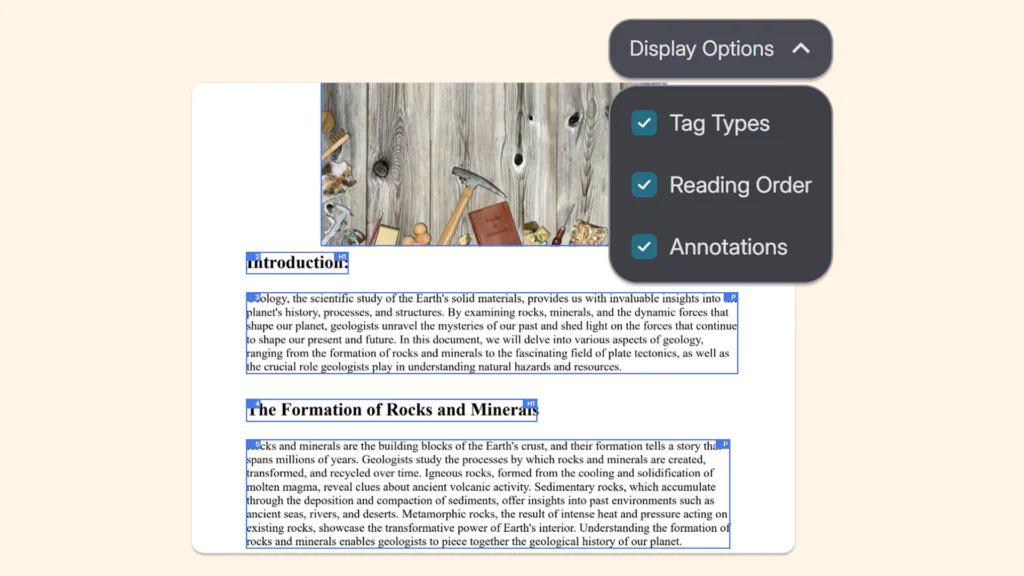
Manually searching every web page is not a practical feat, as public sector websites often have hundreds of pages across their CMS. Content is constantly being updated for public consumption, but what good is accuracy without ensuring access? An administrator of a government website would find it difficult to retrieve an up to date and accurate inventory of accessibility barriers across all of their organization’s web assets without the appropriate tools.
A solution for a well-integrated and accessible environment
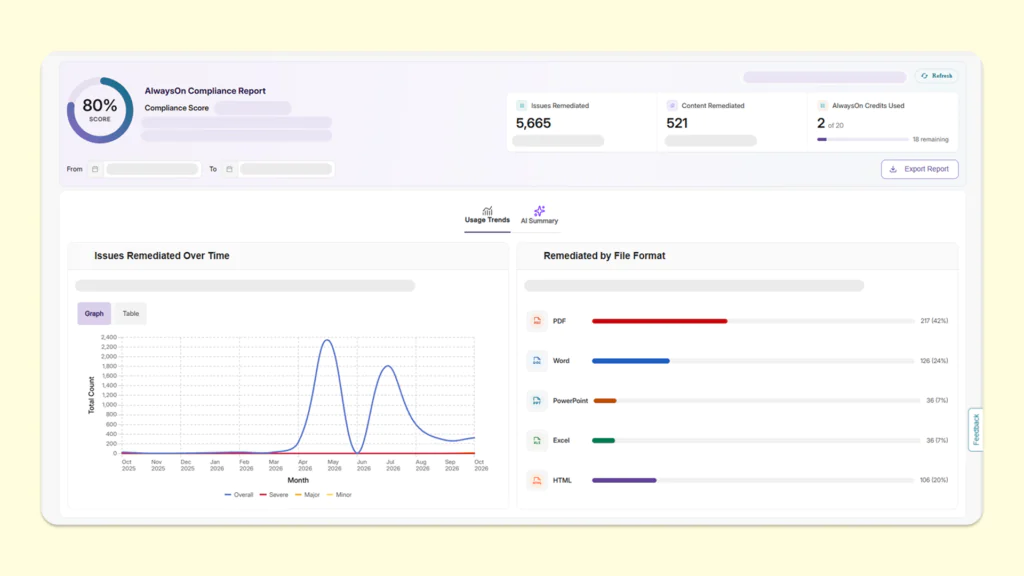
YuJa EqualGround provides effective integration with SharePoint and other common CMSs that public and regulated sectors use. With YuJa EqualGround’s recent v26.7.0 release, users of the platform can expand their scanning scope to include documents without having to delete or re-add their SharePoint site. Users will also benefit from automatic rescans in Drupal, WordPress, and SharePoint, saving both time and energy for busy public sector employees.
With YuJa EqualGround’s strong CMS integration capabilities, governments and regulated sectors can be well prepared to deliver accurate, legible, and high quality information to individuals with diverse needs.
Citations:
Bai, Yang. (2019) The Relationship between Website Accessibility and Usability: An Examination of U.S County Government Online Portals. The Electronic Journal of e-Government. vol17 no 9. https://academic-publishing.org/index.php/ejeg/article/view/666
Ahmed, F. Z., Noblin, A., Courtelyou, K., & Tynes, G. (2026). Evaluating the Readability, Accessibility, and Quality of Online Health Information on Opioid Use Disorder: A Comparative Analysis of Government and Non-Government Websites. Advances in health information science and practice, 2(1), eSVXO9846. https://doi.org/10.63116/SVXO9846