Product Updates
Get the latest platform updates, features, and announcements—all in one place.
Boost Video Accessibility with the GenAI Video PowerPack!
Try Now
Supercharge Your Compliance Efforts with AutoPilot Remediation Max!
Try Now
Strengthen Your PDF Accessibility Efforts with Structural Remediation Max!
Try Now
Don't Miss Any of Our Upcoming Webinars—Save Your Spot!
Register
The YuJa Community is here! Connect, get updates, and access exclusive content.
Join Now

Get the latest platform updates, features, and announcements—all in one place.
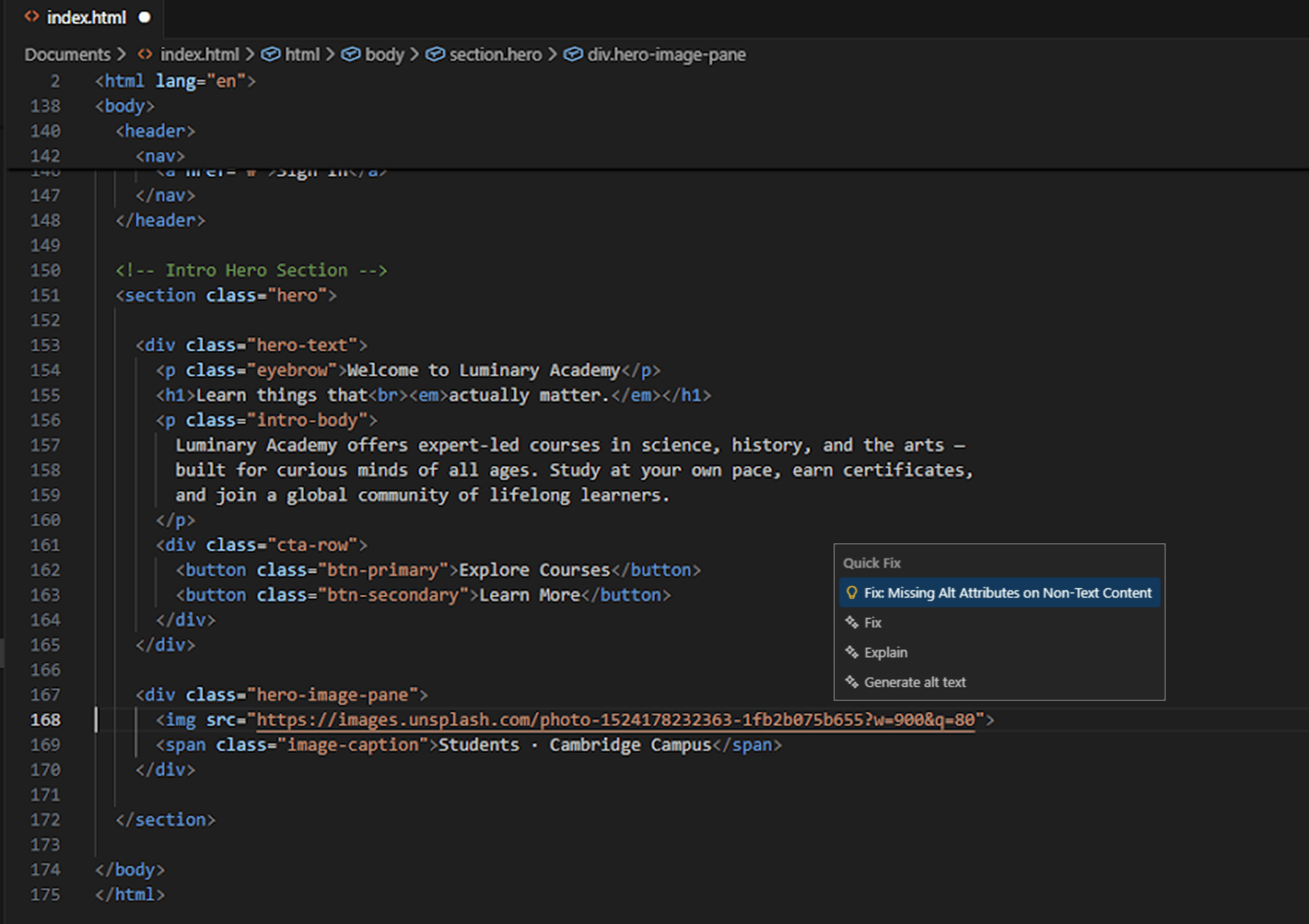
YuJa EqualGround is introducing the DevAssist Module that helps users resolve accessibility issues directly in the VS Code IDE, saving time needed for retroactive manual remediation after web applications have gone live.
Make Accessible Web Apps From Scratch
The YuJa EqualGround DevAssist Module leverages AI to provide quick fixes and detailed explanations for common accessibility issues such as missing captions, color contrast, and font issues in the VS Code IDE. Developers can improve the overall accessibility of their web app as well as the readability and structure of their code base, minimizing time and effort needed for retroactive remediation.
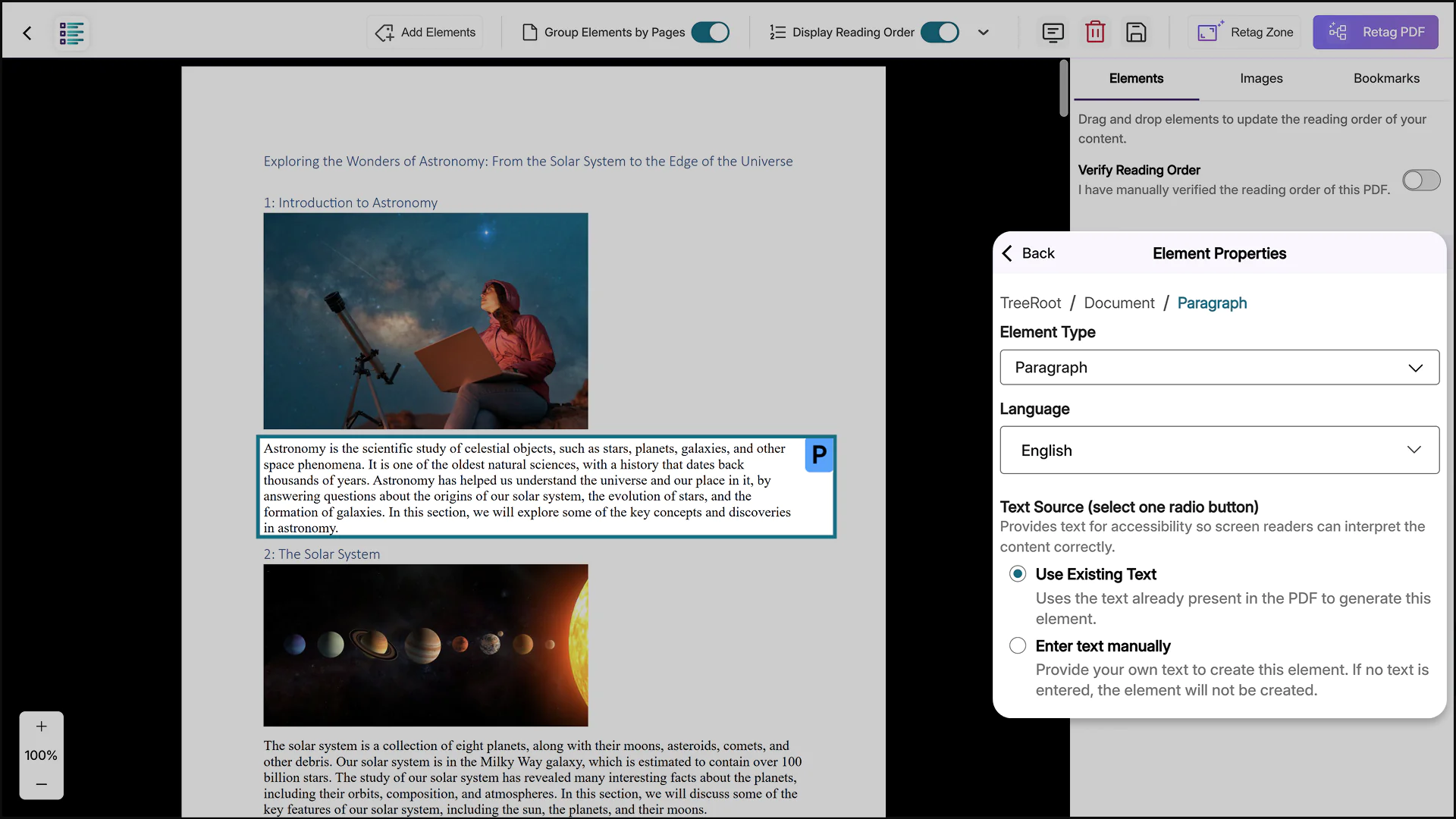
Over the next few weeks, YuJa Structural Remediation will be adding new features that allow users to use Structural Remediation in Microsoft Word and PowerPoint, reprocess low-quality OCR PDF’s, and run OCR when using Add Elements.
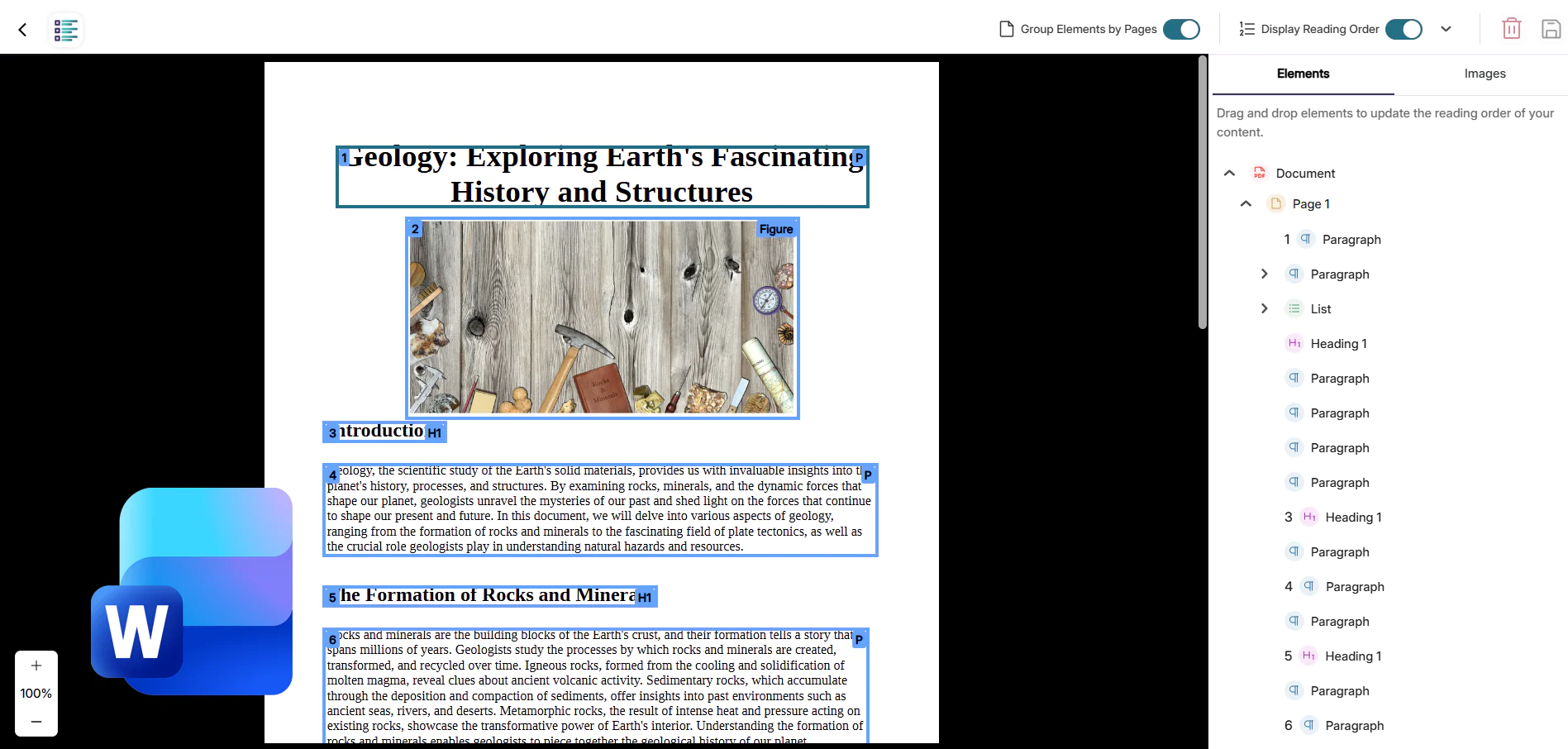
New Structural Remediation Support for Microsoft Word Documents
Structural Remediation is expanding its capabilities to support Microsoft Word, allowing all existing users to transform page elements directly in the LMS. Users will now be able to effortlessly adjust and add properties to elements on a page using the YuJa Structural Remediation Max Engine, improving overall usability for anyone using assistive technologies and saving valuable time for instructors.
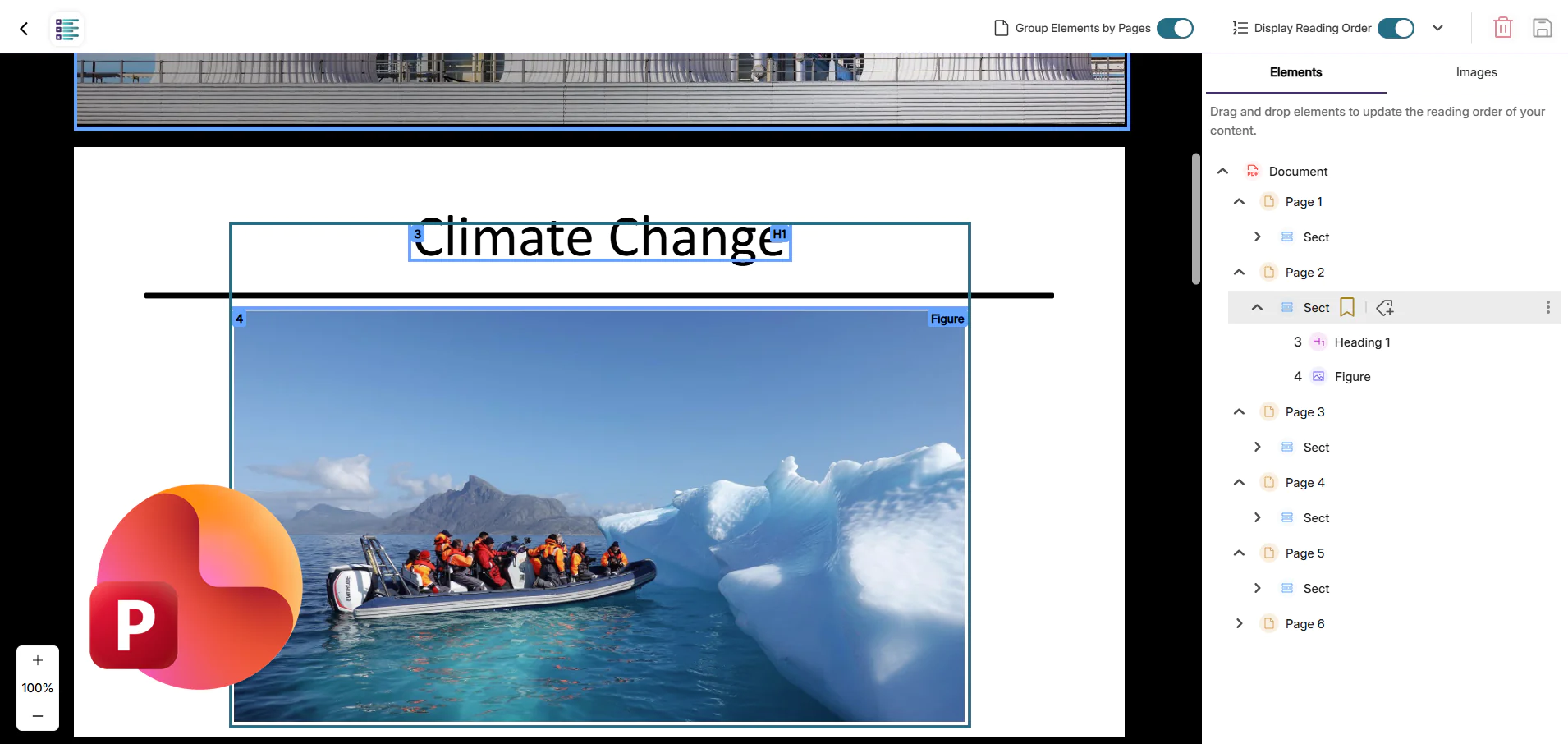
New Structural Remediation Capabilities in Microsoft PowerPoint
Structural Remediation now allows existing users to select elements in Microsoft PowerPoint documents to make changes such as adding alt text, altering structure, changing colors, and more, all without leaving the interface. Changes made by the user will be directly saved within the file, ensuring the file has proper semantic structure, reading order, and accessible elements. This update will help instructors assemble presentations that are both visually appealing and structurally accurate, allowing students who rely on assistive technology to have a seamless learning experience as well.
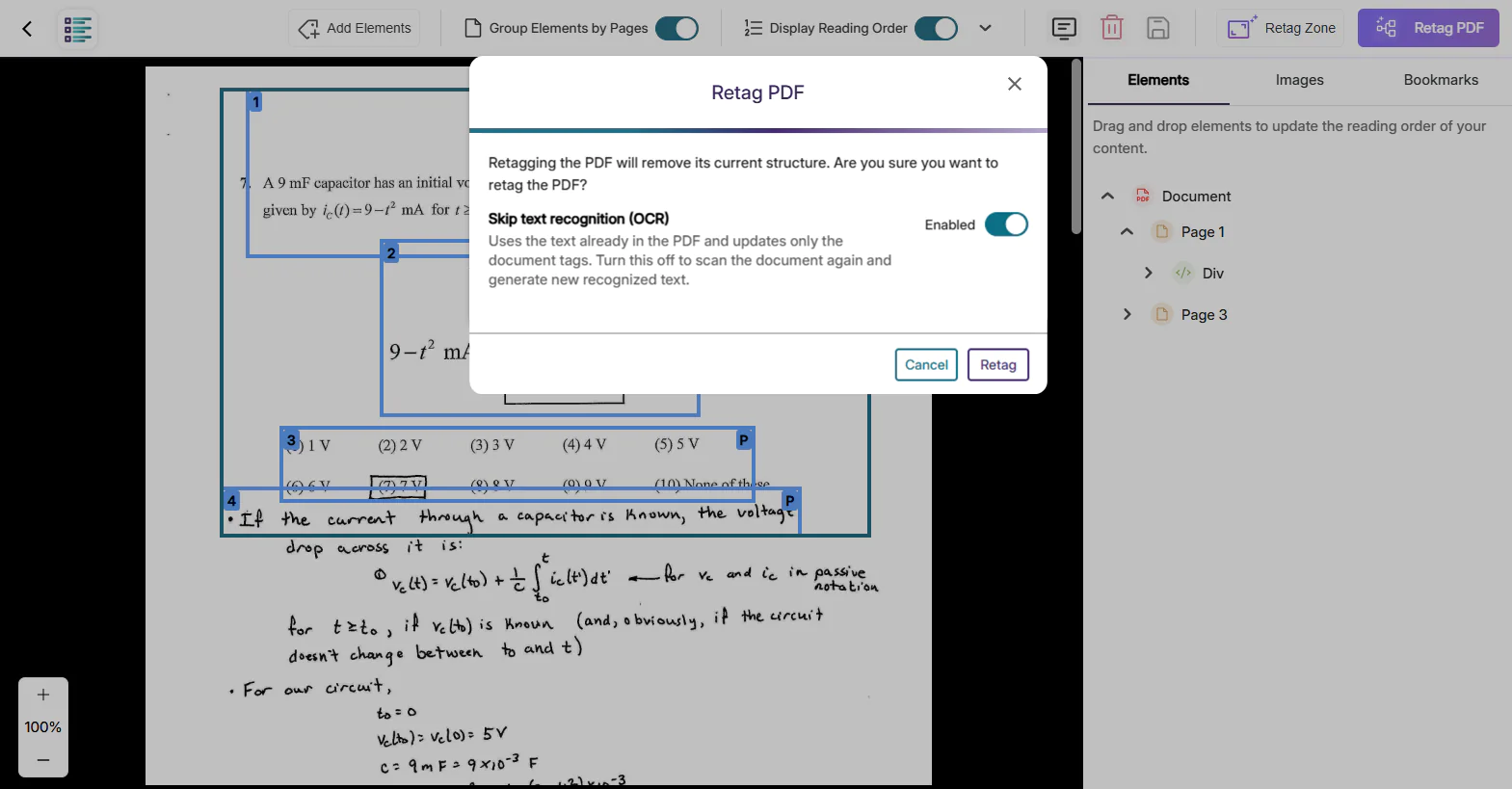
Enhanced OCR Reprocessing for Previously Tagged PDFs
Panorama now enables users to re-run optical character recognition on PDFs that were previously processed with lower-quality OCR by other vendors. When retagging a document, users can choose to perform a fresh OCR pass using Panorama’s advanced engine, ensuring that image-based and handwritten content is accurately captured. After reprocessing the text layer, Structural Remediation can quickly analyze and correct complex accessibility issues. This streamlined workflow transforms poorly recognized PDFs into highly accessible, standards-compliant documents while reducing manual effort for faculty and improving usability for all users.
Run OCR when Adding Elements for Precise Document Remediation
Structural Remediation now runs OCR when using the Add Elements feature. When selecting a target section for Add Elements, users will be given the option to use OCR on the existing text layer or manually enter text as the text source. By applying OCR where it’s needed, this update speeds up PDF remediation, reduces unnecessary processing, and gives users precise control over document accessibility improvements.
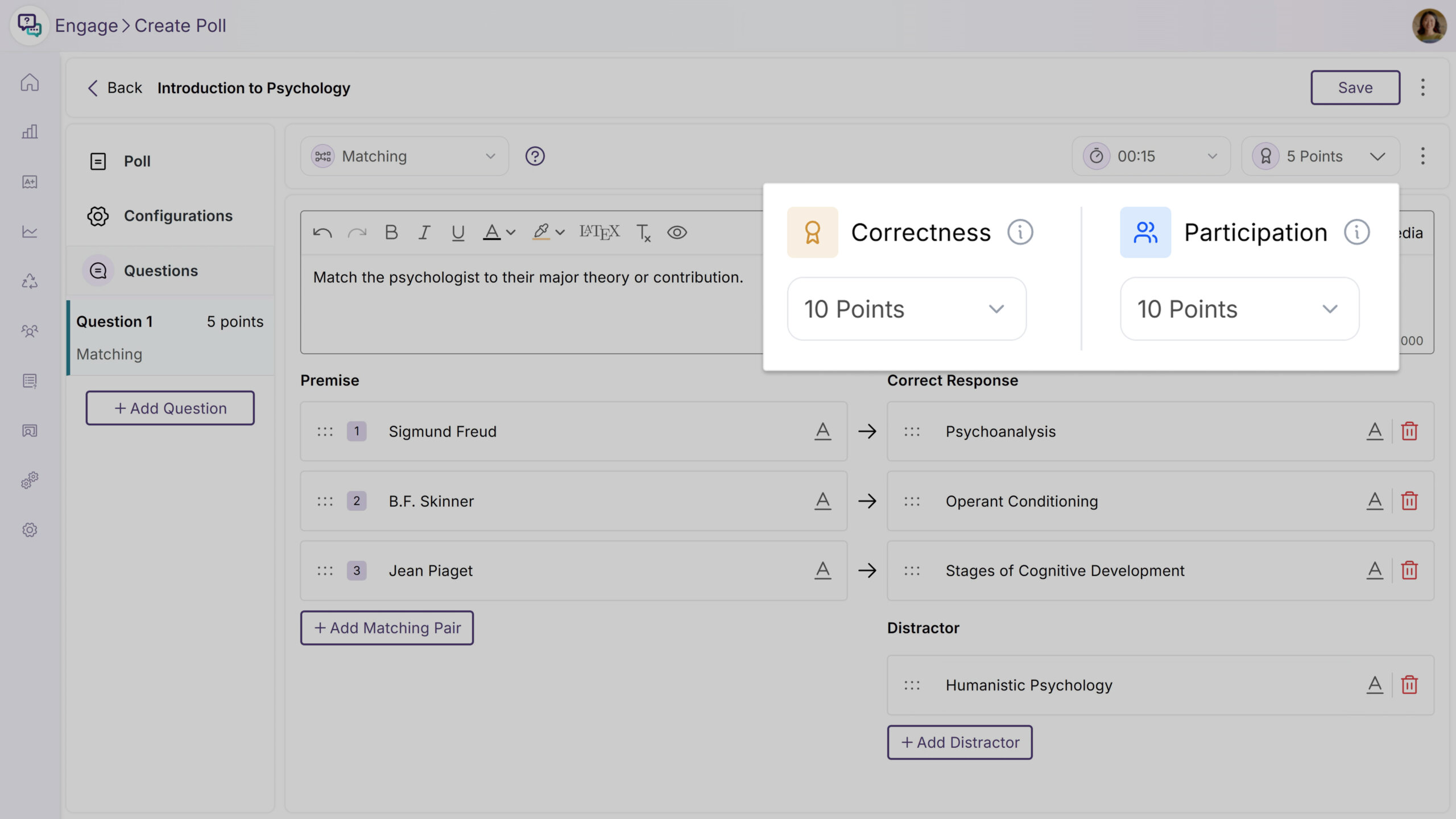
Over the next few weeks, the YuJa Engage Student Response System will be rolling out a new feature to support split scoring, allowing instructors to divide a poll question’s points between participation and correctness.
Flexible Poll Scoring with Participation and Correctness Points
YuJa Engage polls now support split scoring, allowing instructors to divide a question’s points between participation credits, for attempting the question, and correctness points, for answering correctly. Instructors can configure and view this breakdown to better reflect engagement and understanding, while students only see the total points. This added flexibility encourages participation without penalizing learning in progress, and gives instructors clearer insight into student performance.
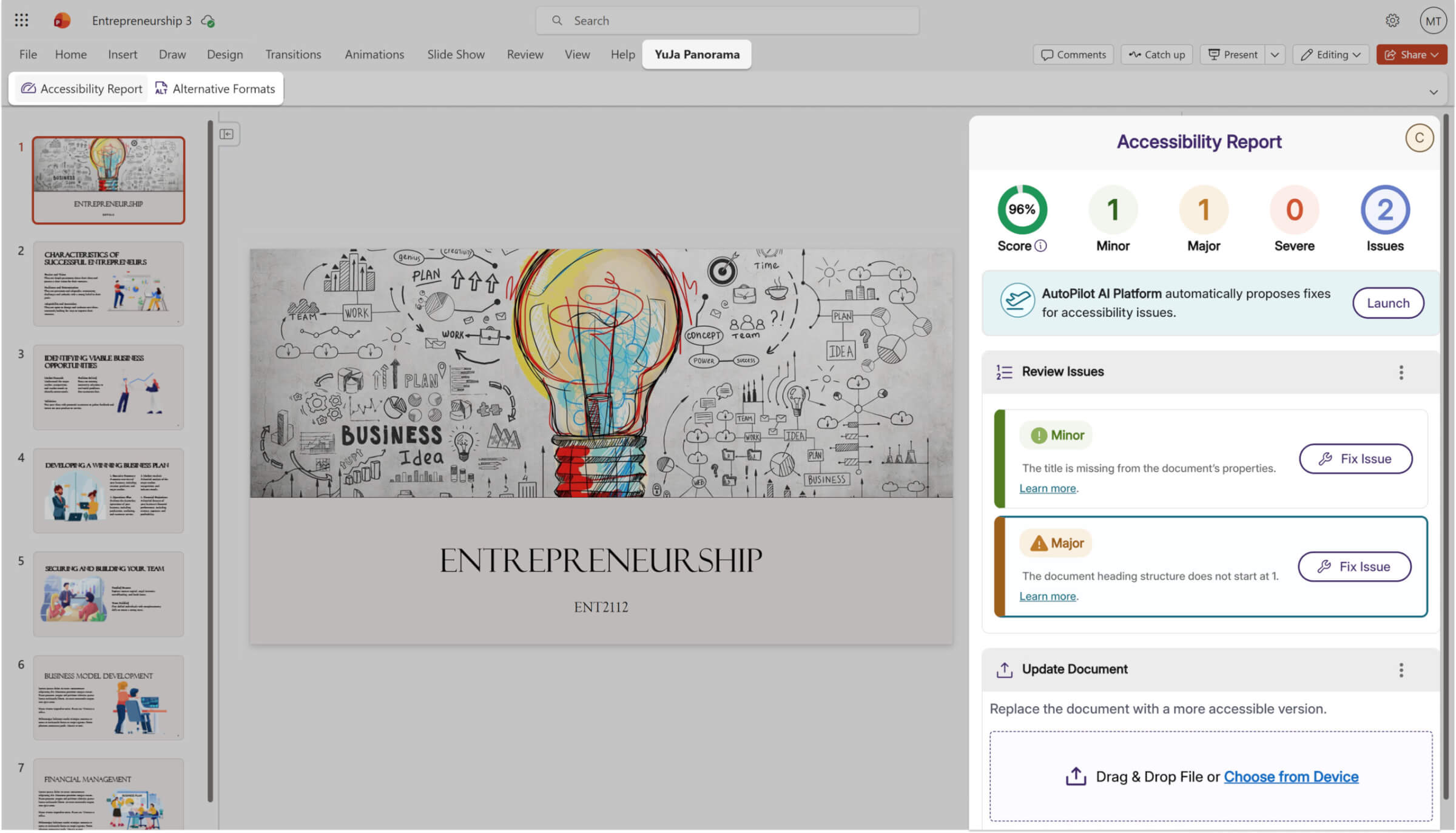
We’re rolling out updates to YuJa Panorama’s Structural Remediation Max capabilities over the next few weeks, which include a new Microsoft Office Add-in for PowerPoint that enables inline accessibility remediation and automated fixes with YuJa AutoPilot, without ever leaving the presentation.
YuJa Panorama Office Add-in Now Available in PowerPoint
The YuJa Panorama Office Add-in is now available for Microsoft PowerPoint, extending support beyond Word. Instructors and content creators can open the Accessibility Report directly within PowerPoint and remediate issues inline, without leaving the presentation. With YuJa AutoPilot, common accessibility issues can be addressed automatically, reducing manual effort while helping ensure slide content meets accessibility requirements faster and at scale.
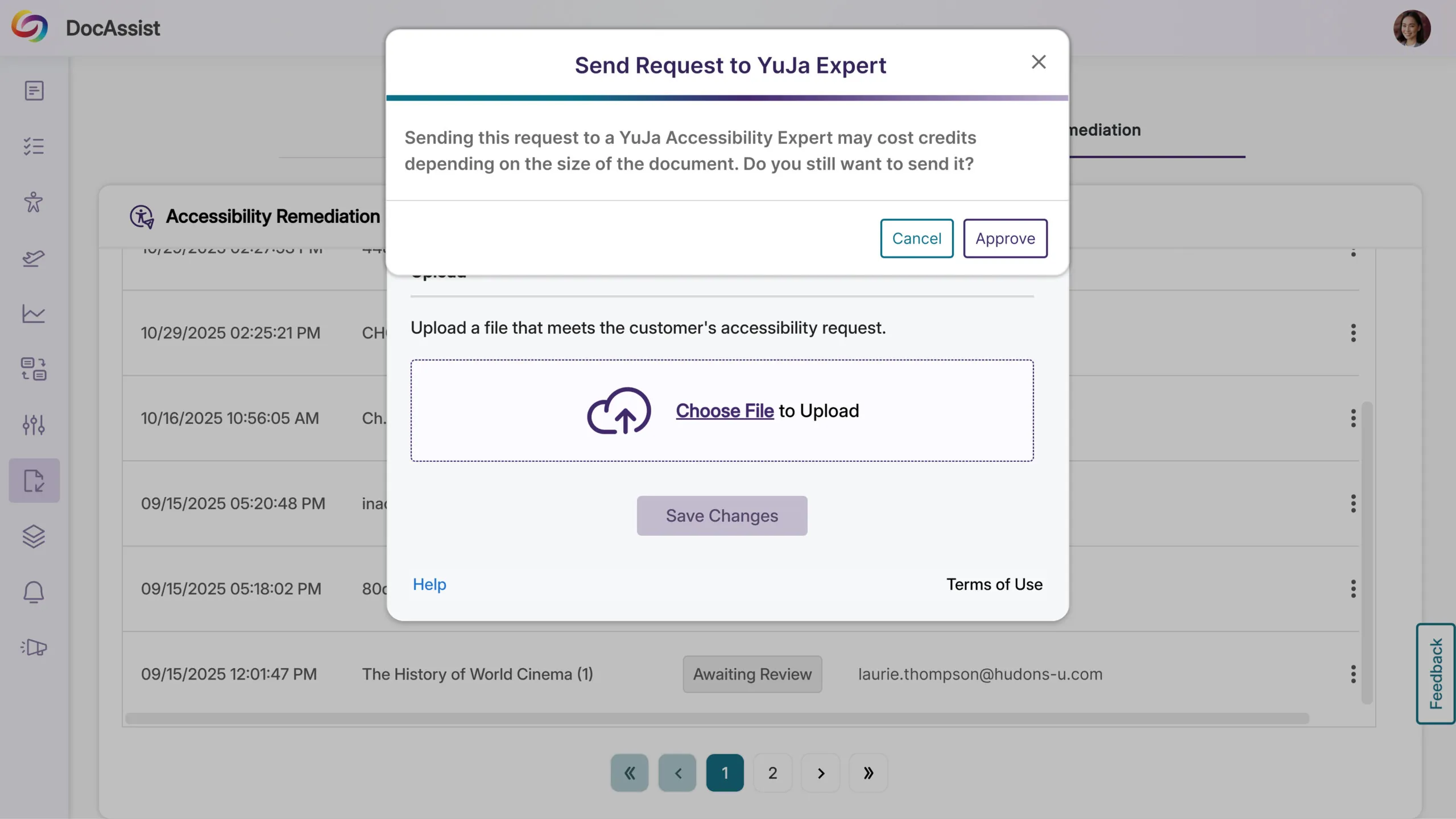
Rolling out over the next few weeks, new updates to the YuJa DocAssist Accessibility Module allow admins to review and approve instructor requests, helping institutions maintain workflow oversight, prevent misuse, and better manage accessibility remediation spending.
Approve DocAssist Requests to Optimize Spending and Workflow
Administrators can now review and approve instructor requests for the YuJa DocAssist Accessibility Module before they are sent to YuJa. This ensures requests are intentional, prevents misuse, and helps optimize spending, especially for page-based remediation, while keeping workflows efficient and under institutional control.
Join the 1,000+ Organizations Deploying High-Impact Solutions