

Product Updates
Get the latest platform updates, features, and announcements—all in one place.
Boost Video Accessibility with the GenAI Video PowerPack!
Try Now
Supercharge Your Compliance Efforts with AutoPilot Remediation Max!
Try Now
Strengthen Your PDF Accessibility Efforts with Structural Remediation Max!
Try Now
Don't Miss Any of Our Upcoming Webinars—Save Your Spot!
Register
The YuJa Community is here! Connect, get updates, and access exclusive content.
Join Now

Get the latest platform updates, features, and announcements—all in one place.
Over the next few weeks, the YuJa EqualGround Accessibility Governance Platform is rolling out a major wave of updates, including a reimagined reporting experience, a brand new Quick Wins dashboard, expanded CMS remediation support, bulk AutoPilot remediation, and much more.
Automatic Write Back Functionality Eliminates Repetitive Manual Workflows for Your CMS and Google Workspace Integrations
You can now fix a range of accessibility issues in the pages and documents hosted in Cascade CMS, Google Workspace, SharePoint, and WordPress, all without leaving the YuJa EqualGround interface.
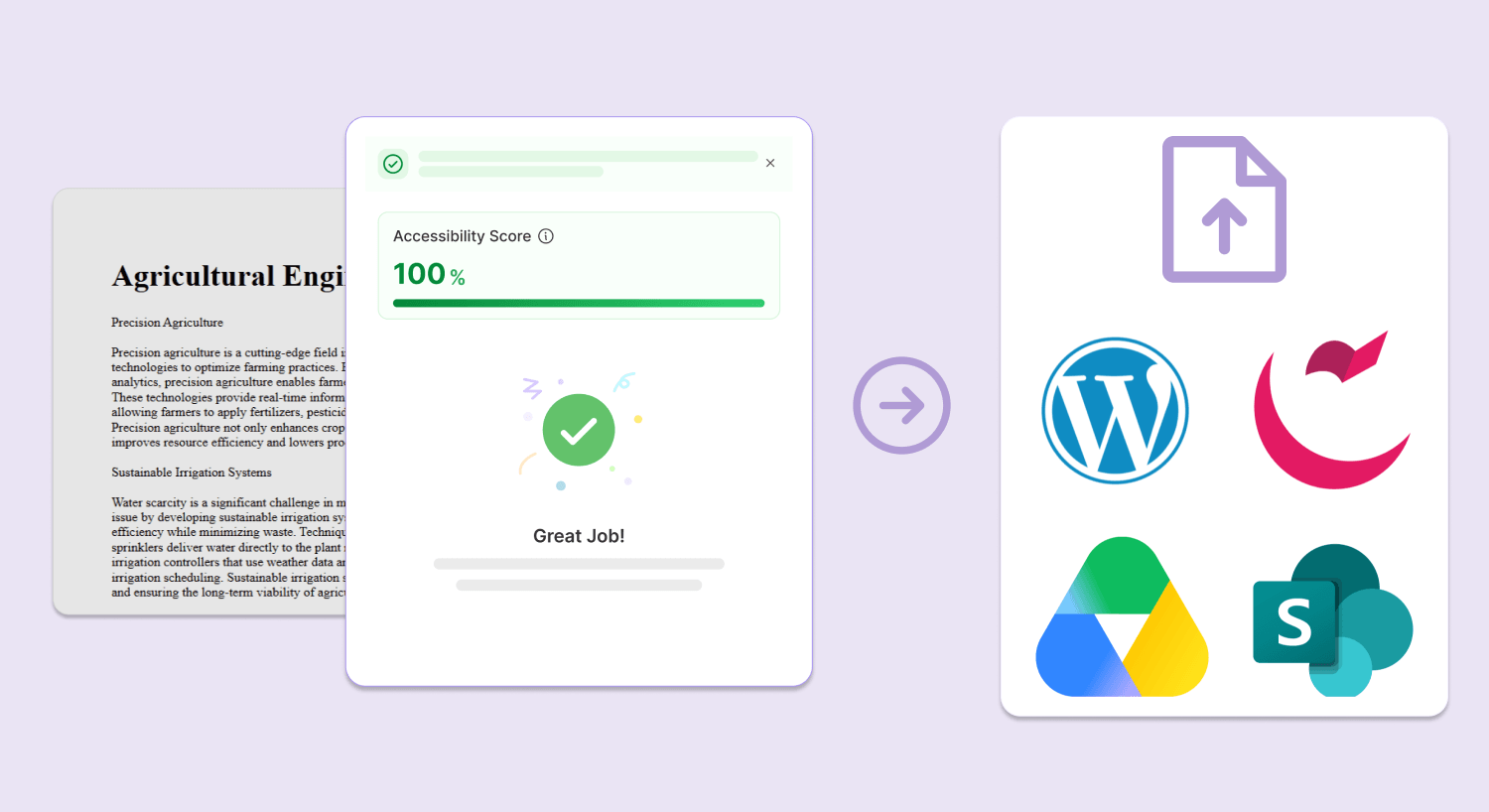
Key features include:
Automatic CMS write back for your documents: Any changes made to documents embedded in your CMS or Google Workspace using the Accessibility Report in YuJa EqualGround will be automatically applied to your original source file, eliminating the need for any manual reuploads.
Automatically apply changes to your CMS pages: Any structural and HTML changes made to your page in YuJa EqualGround will be automatically reflected in your CMS so you don’t have to copy and paste any code changes. You can also see how your changes affect the accessibility score of the page in real time using the Rescan button.
Instantly Improve Site-Wide Accessibility Using Targeted Quick Wins
YuJa EqualGround is introducing the Quick Wins Dashboard, which allows users to immediately identify the biggest accessibility barriers on their websites and fix issues across their web assets.
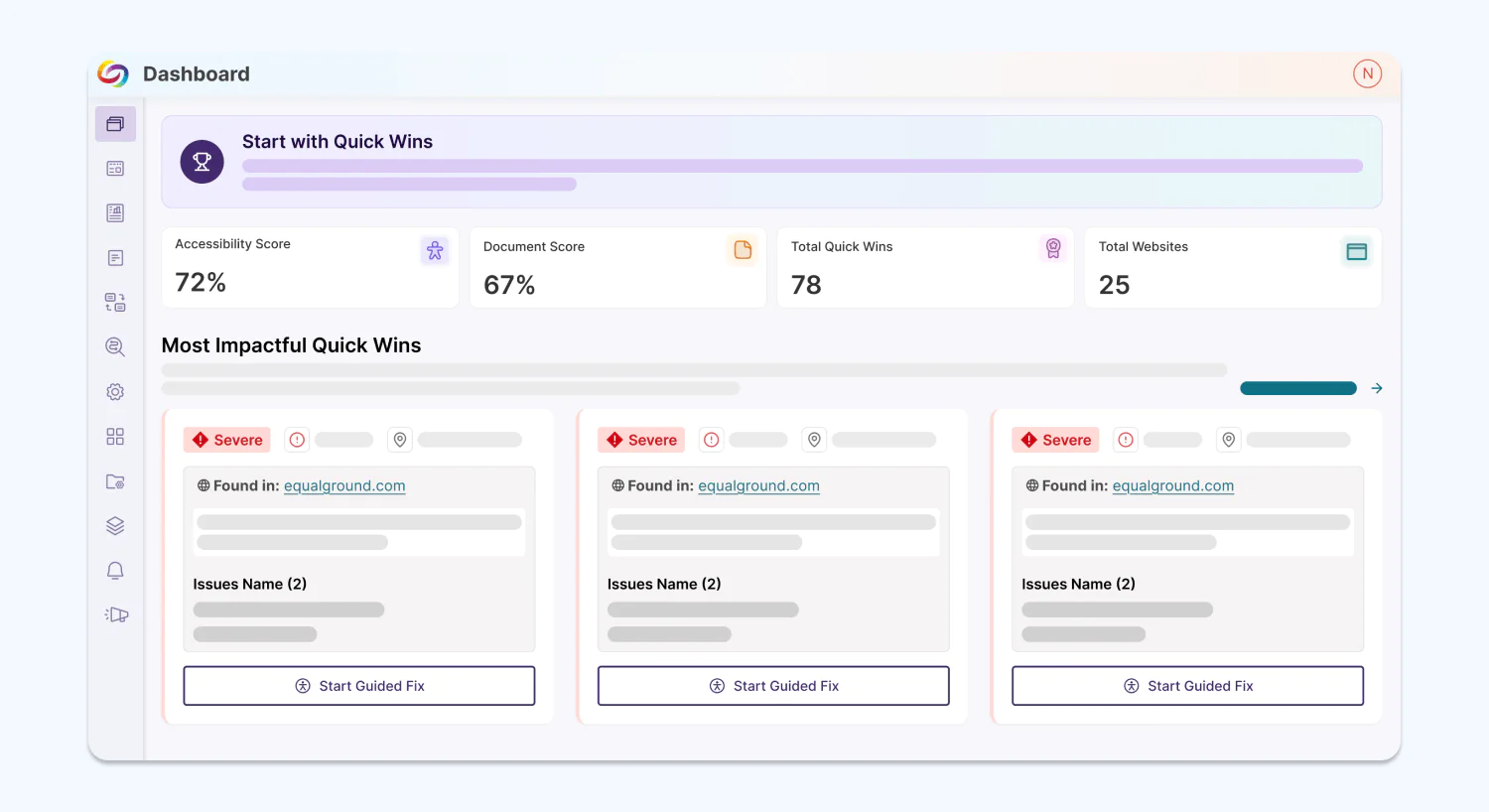
From the dashboard, users can:
Start remediating with Guided Fixes: Users can copy and paste YuJa EqualGround’s suggested fixes for each issue and see details like the total number of affected pages and the violated WCAG criteria.
Verify that changes are live: The dashboard allows users to quickly rescan all pages affected by the issue to see if the change has been applied.
See all Quick Wins: The dashboard will show up to the top 100 most impactful Quick Wins. To see more, users can click a button to be directed to all Quick Wins.
Automatically Remediate Documents at Once with Bulk AutoPilot
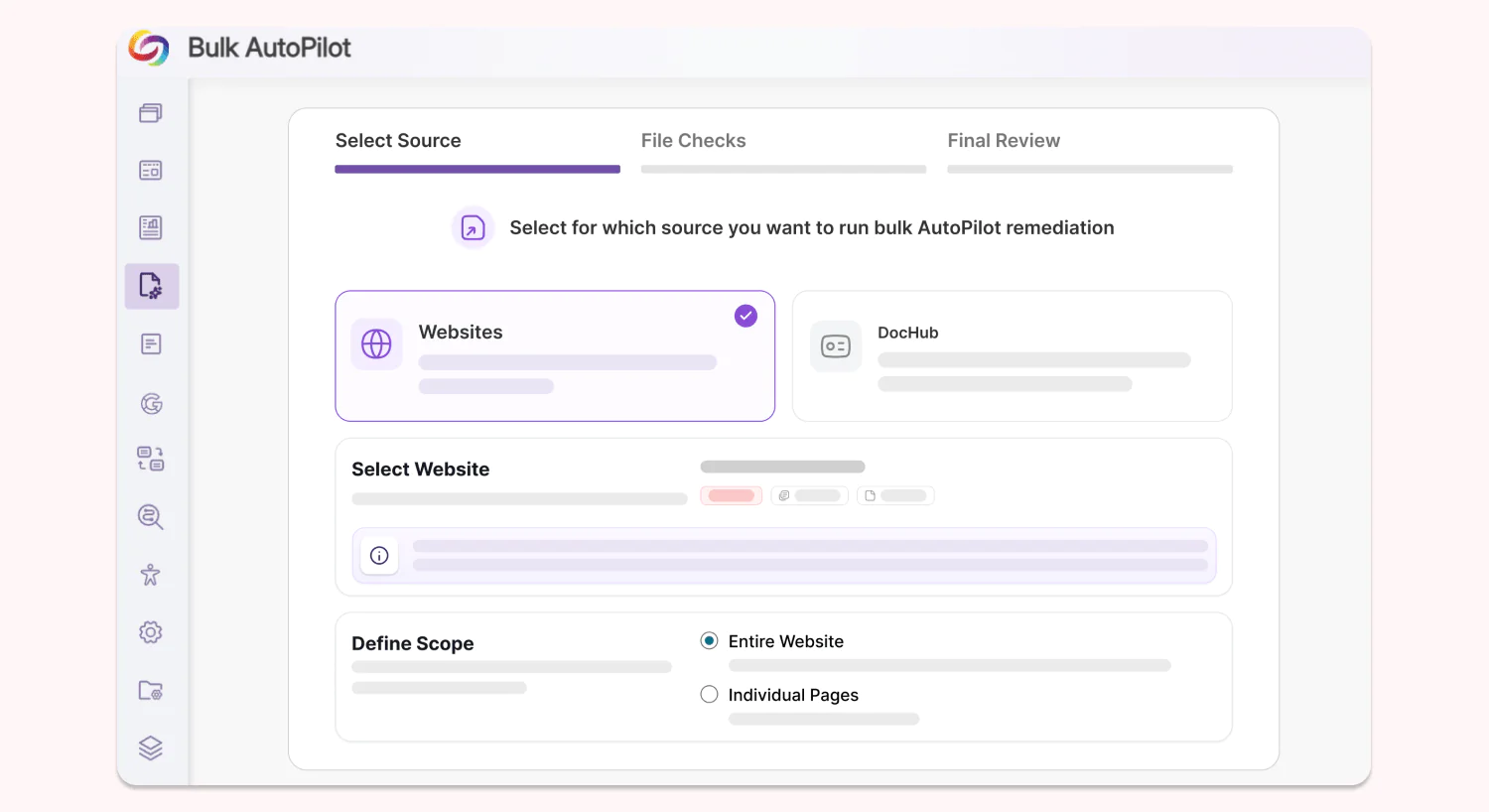
Institutions can now automate multiple document remediations across websites, SharePoint sites, and DocHub libraries in a single batch using Bulk AutoPilot. Users can remediate the whole site/library, individual pages/folders, and choose the type of issue that they want to target, having full control over their AutoPilot remediation workflows.
Get Better Insights from an Upgraded Reporting Interface, Now with AI-Powered Analysis
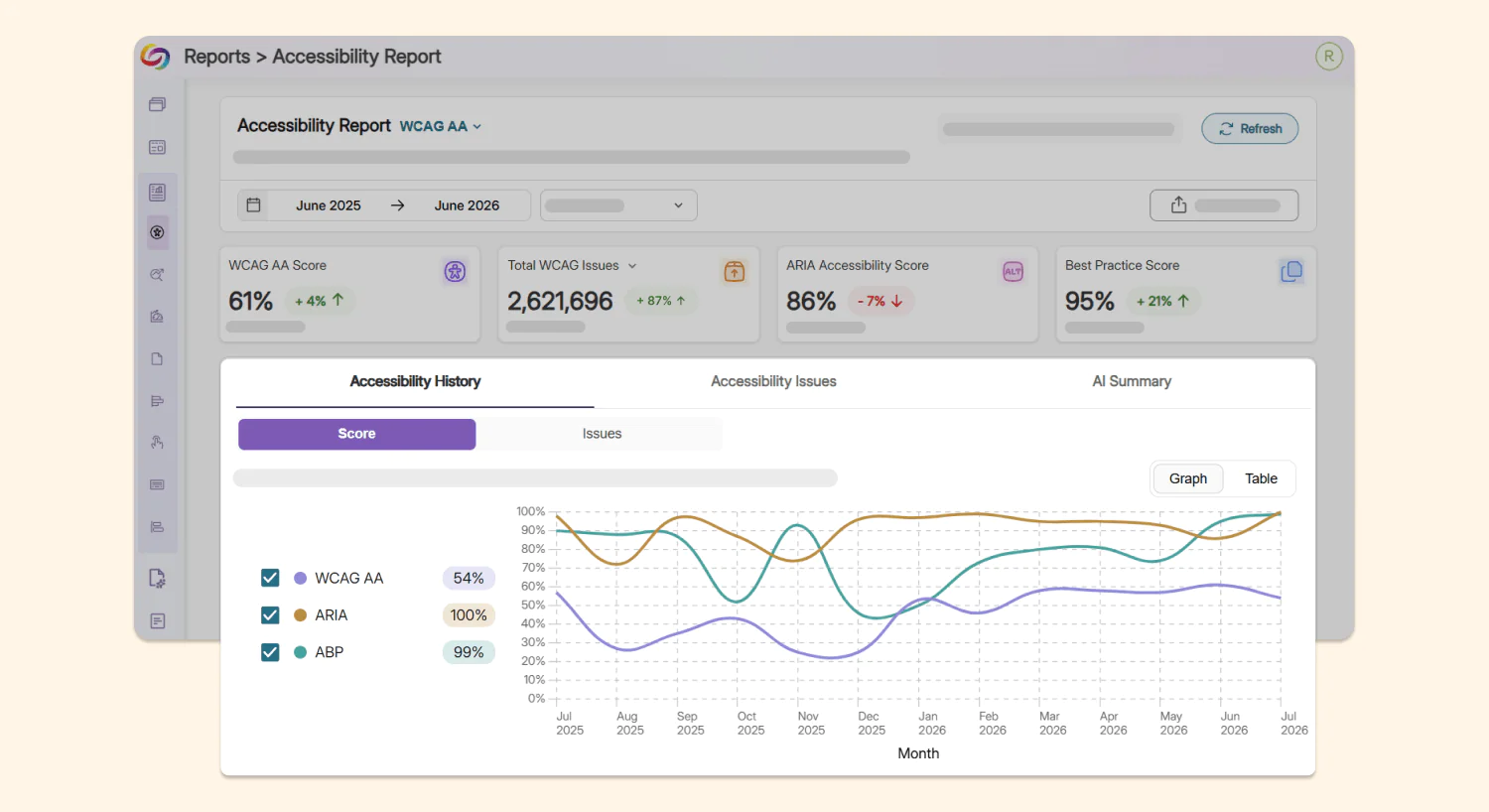
YuJa EqualGround’s reports have been redesigned across all five report types: Accessibility, SEO, Performance, Usability, and Document for a cleaner, more consistent and practical user experience. Each report now contains:
Historical trends: Users can see the historical trends of their compliance level via score and via issues in visual graphs, allowing them to easily curate their compliance strategy.
Issues breakdown: Organized in a neat table view, YuJa EqualGround shows the issue type, the severity level, the conformance level, and a short description of each issue identified on the user’s web assets, allowing users to identify major barriers instantly.
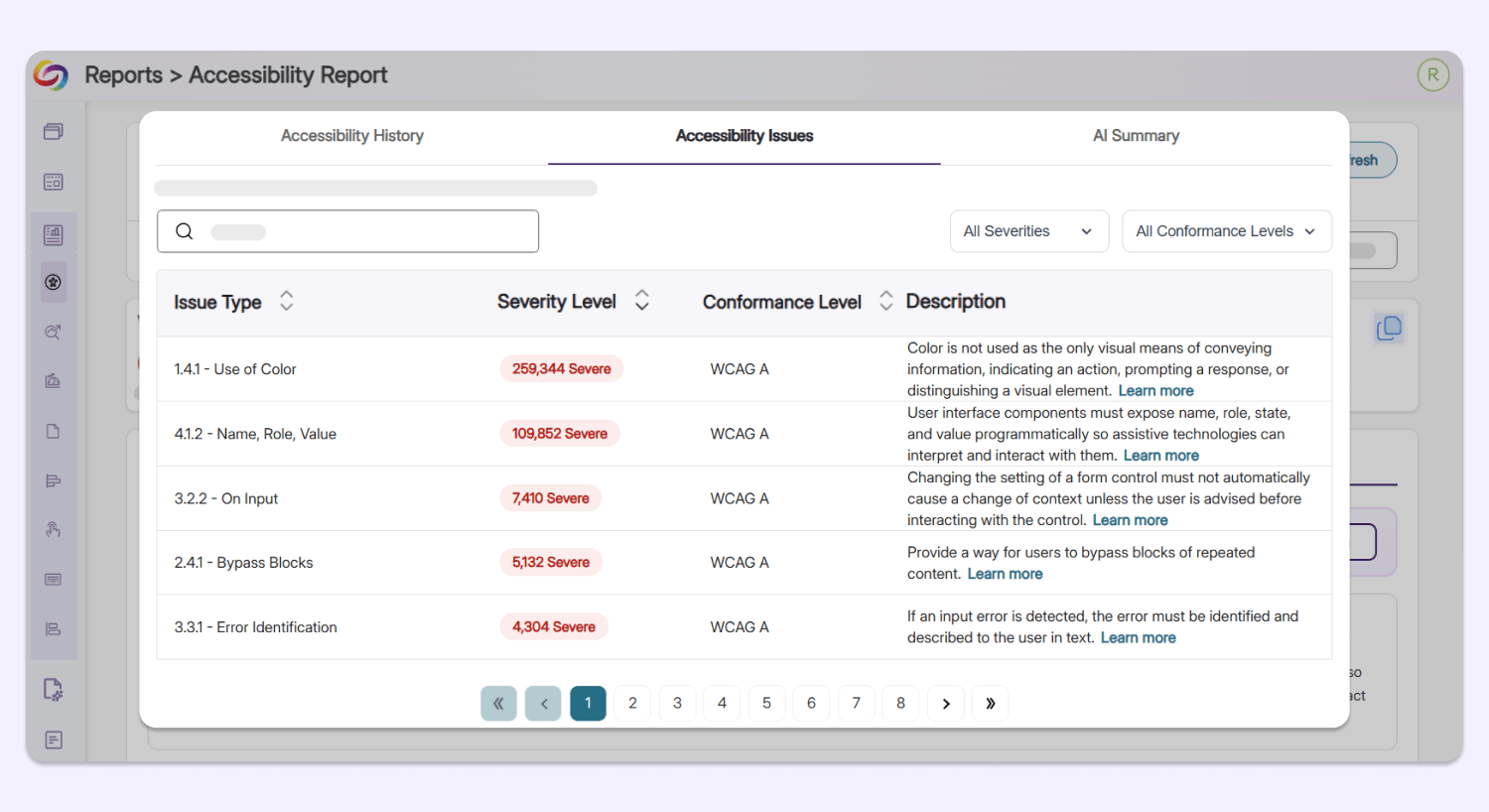
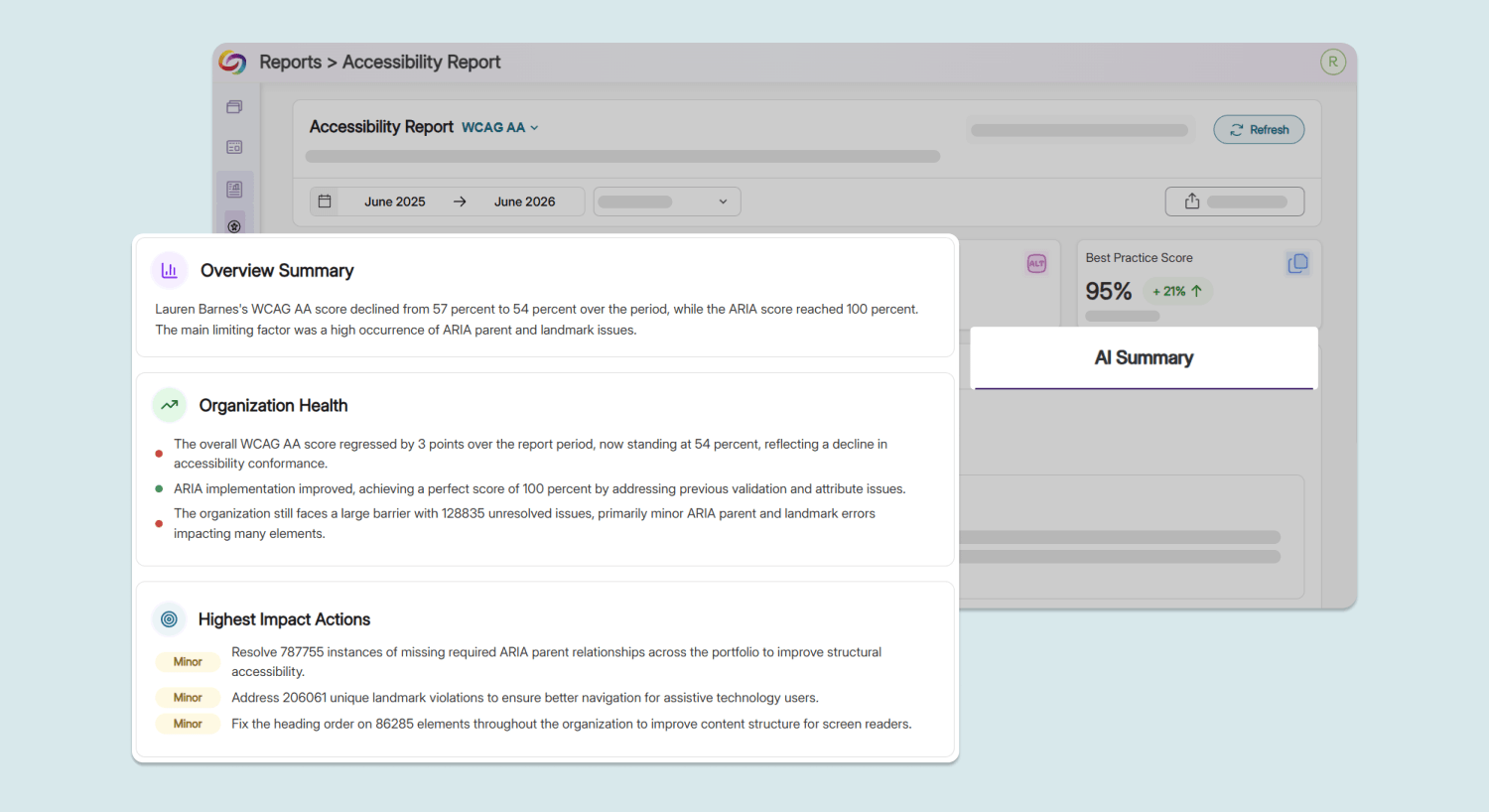
AI-powered summary: A brand new AI Summary tab will automatically analyze and explain the overall accessibility health of the user’s website, highlighting the higher priority issues to address so users spend less time interpreting data and more time acting on it.
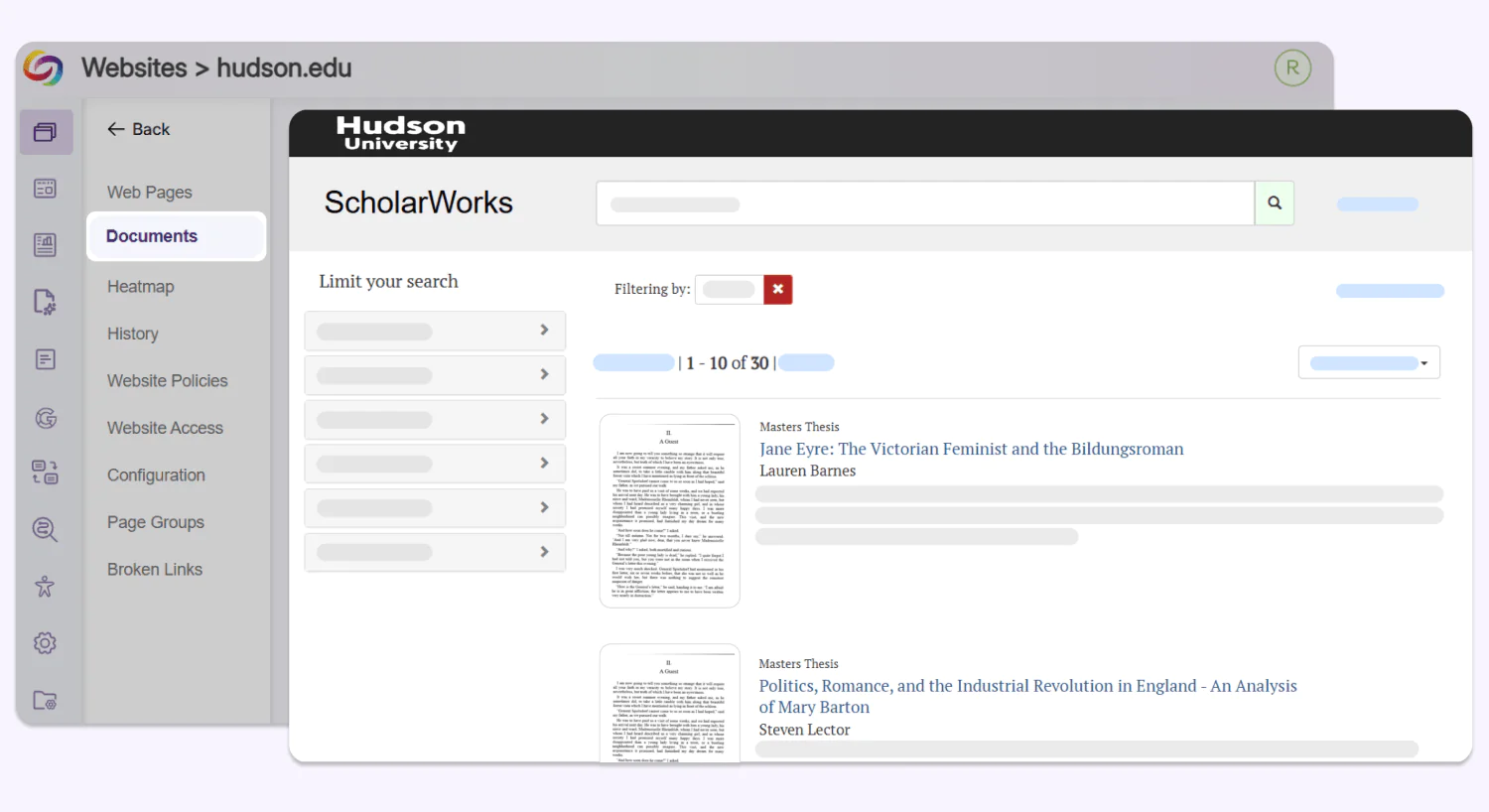
New Integration with ScholarWorks Empowers Accessibility Remediation for Academic Documents
Institutions can now connect YuJa EqualGround with ScholarWorks via API to scan academic papers, theses, and other scholarly content in their academic repository. Setup takes minutes, and newly found documents show up right in the Documents tab, ready for remediation.
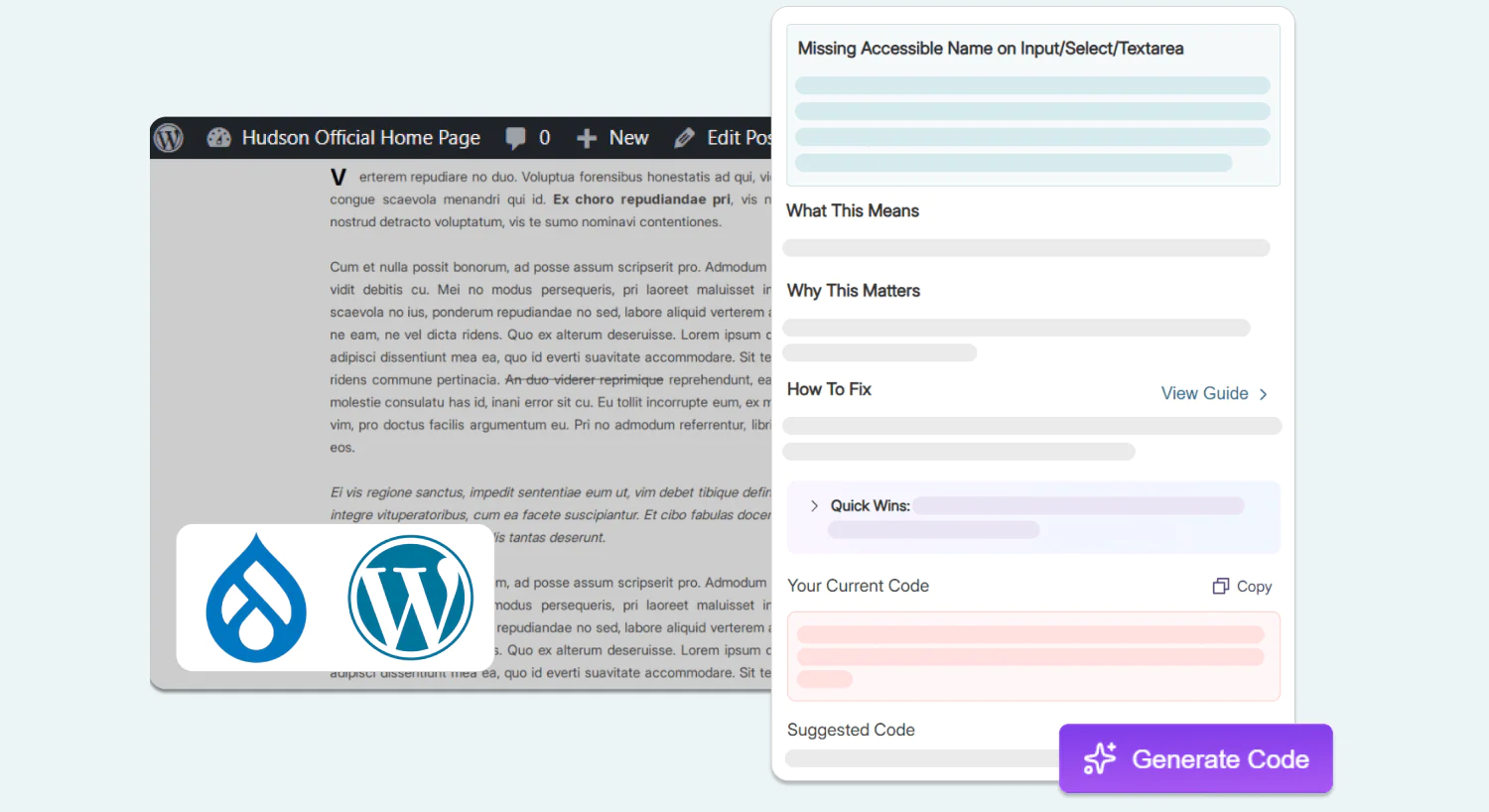
Remediate Assets Faster with AI Content Generation, Now in the Browser Extension, WordPress, and Drupal
AI-powered content-generation support has been extended to the YuJa EqualGround browser extension, WordPress, and Drupal, helping users improve the accessibility of their site by automatically adding descriptions like alt text and ARIA labels on the spot.
Upgraded Performance Report Facilitates a Painless and Transparent User Experience For All Audiences
The Performance Report in YuJa EqualGround has been expanded to provide more context, usability, and guidance for users to improve their website. The report now includes:
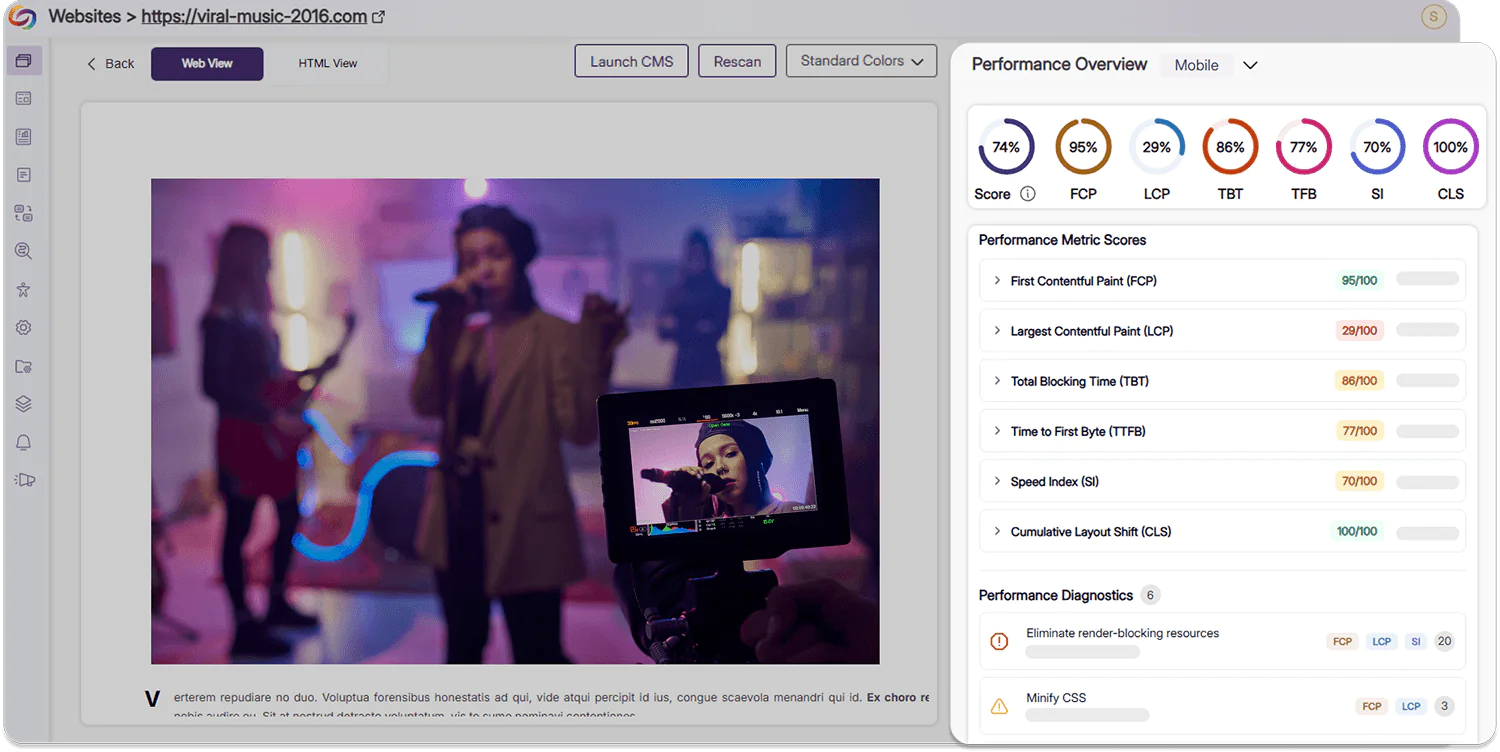
New support for mobile performance: Users can now see advanced performance metric scores and diagnostic statistics for both desktop and mobile experiences. With this addition, users can ensure that their website can be easily accessed by a broader selection of audiences using diverse platforms.
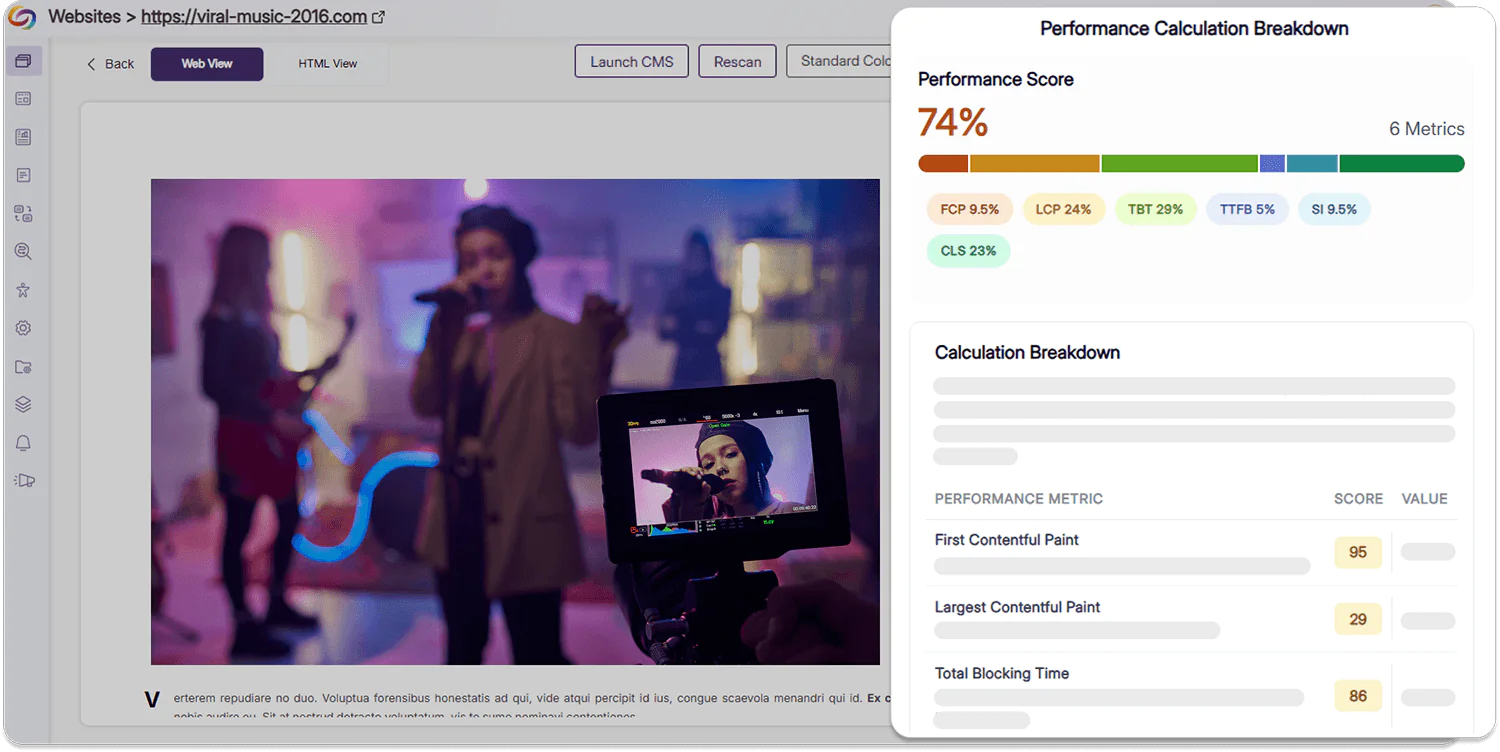
Clear breakdowns of your performance score: Users can now view a color-coded visualization of their performance score and an exact breakdown of how their score is calculated using various metrics in order to make targeted improvements.
A Smoother, Easier Workflow to Add and Configure Your Web Assets
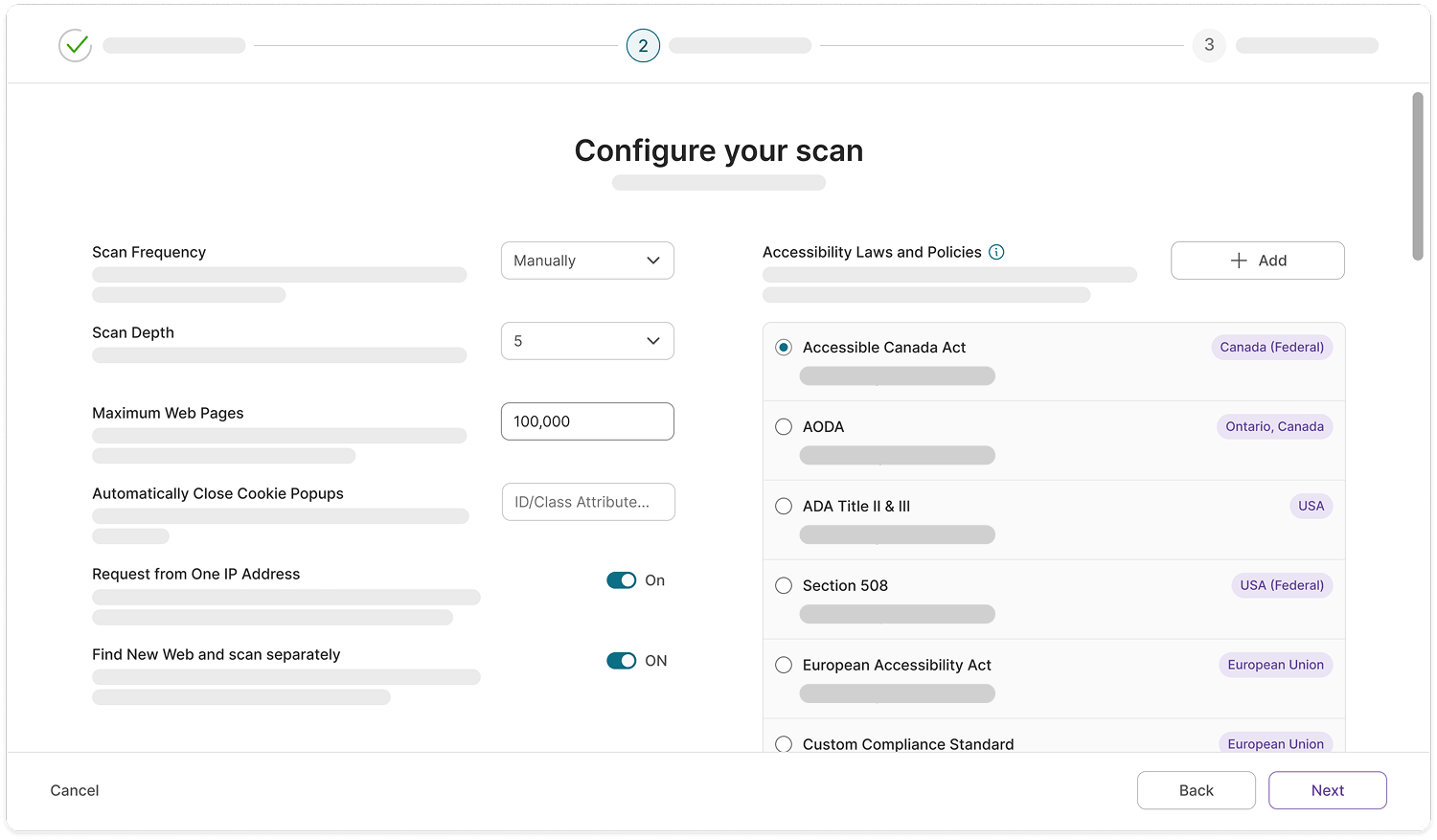
A redesigned layout will be added to the Configuration tab, making website settings easier to locate, navigate, and adjust. The workflow for adding new websites in YuJa EqualGround has also been upgraded to introduce additional clarity into setting up configurations such as required log in credentials, accessibility conformance levels, and IP address requests.
Track Both Accessibility Compliance and Engagement in One Centralized Location While Remediating Your Page
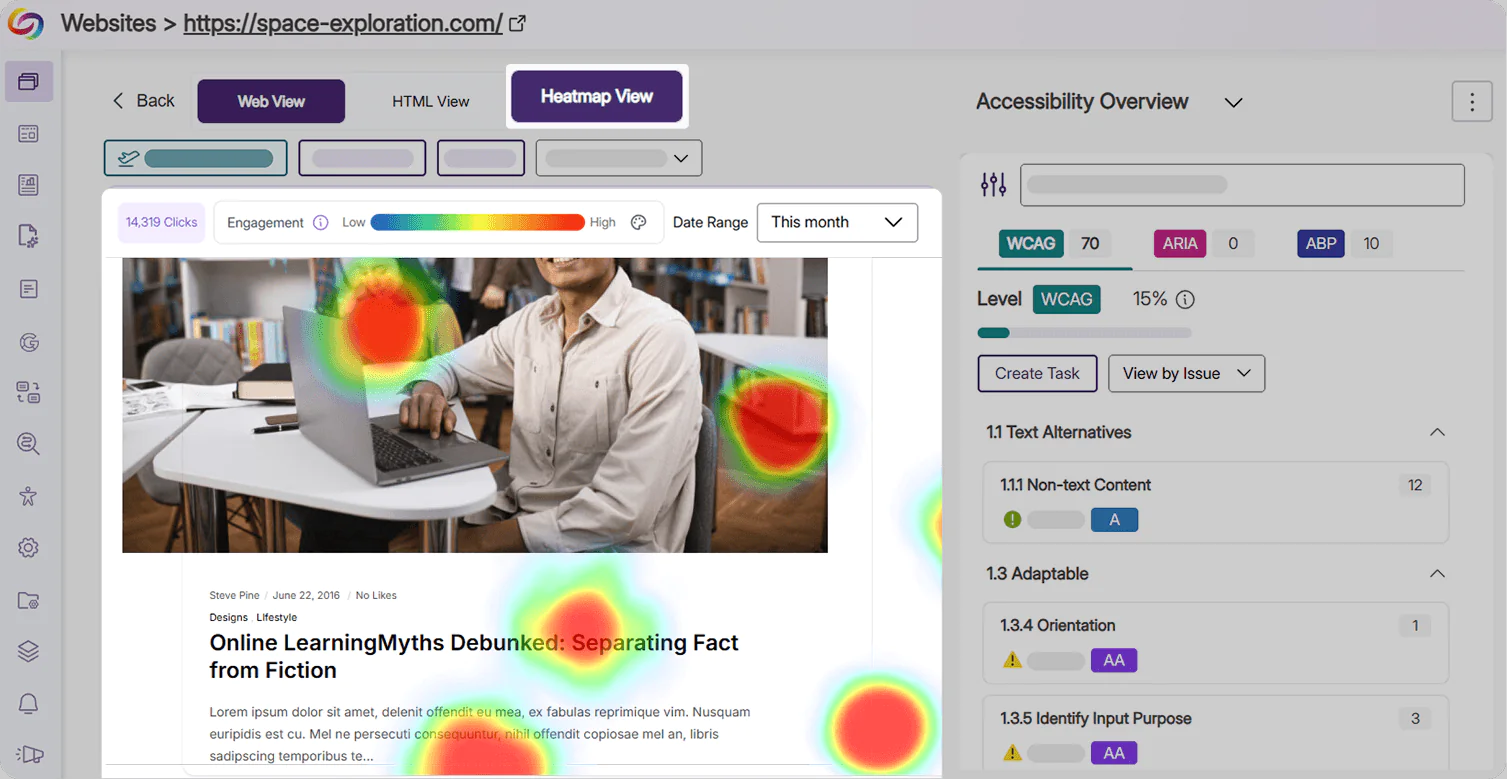
Users can now easily track heatmap statistics and review how external users are engaging with their website directly in the Issues Panel. Users can now also add heatmap tracking to their page from this workflow, eliminating the need to configure any scripts.
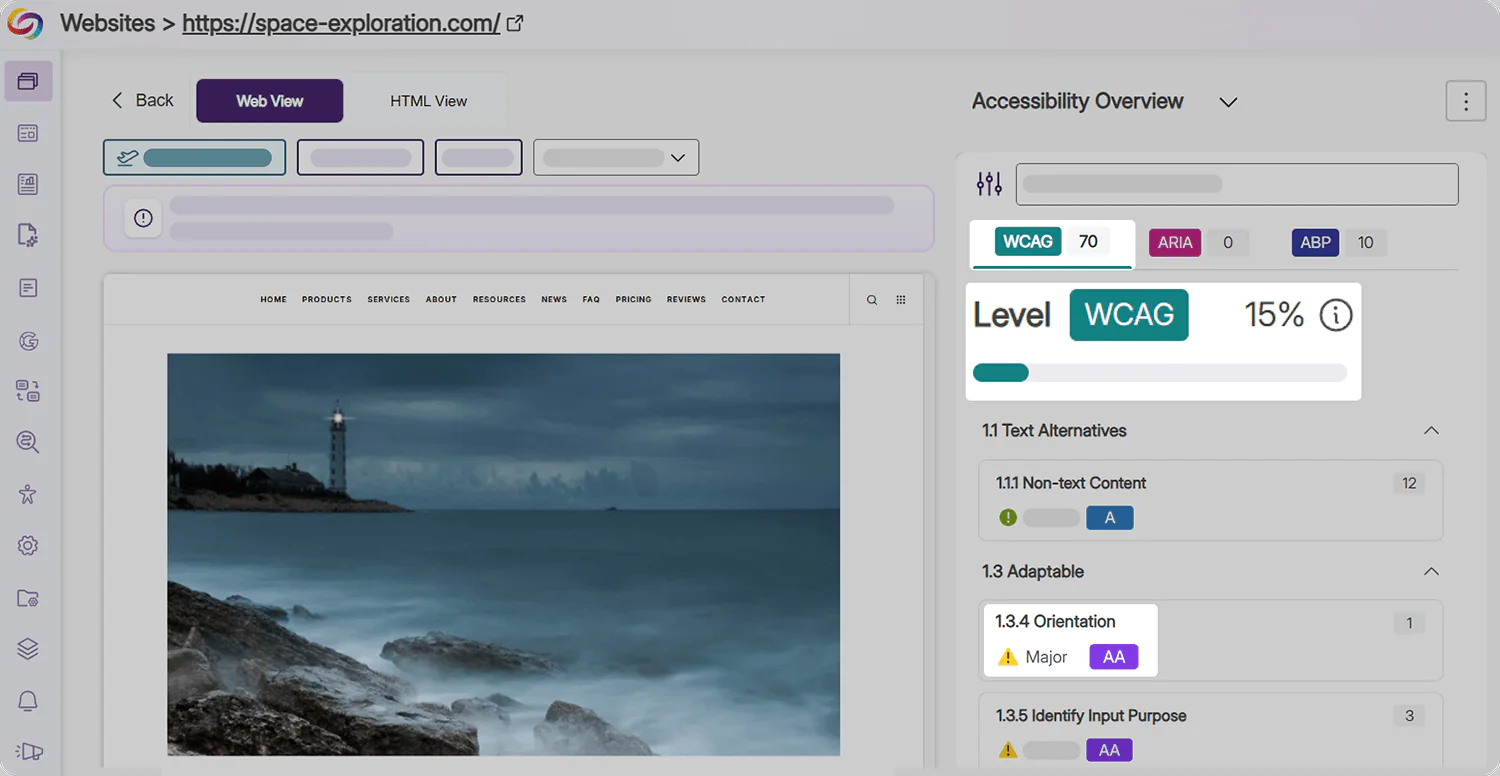
A Simplified View for All WCAG Accessibility Standards
All WCAG issues (Levels A, AA, and AAA) are now displayed together in a single view in the Issues Panel with badges for each issue type to indicate the severity level. With a single percentage denoting their accessibility compliance, users have a clearer understanding of where their website stands, and barriers that they should target first.
Export Accessibility Reports in Excel Format for Cross-Platform Analysis
Accessibility Reports can now be exported directly to a spreadsheet in Microsoft Excel or Google Sheets, making it easy to share clear, readable findings with colleagues who have both technical and non-technical skills. Exports are available at the organization and website level, and provide quick summaries, issue, and score breakdowns for your assets.
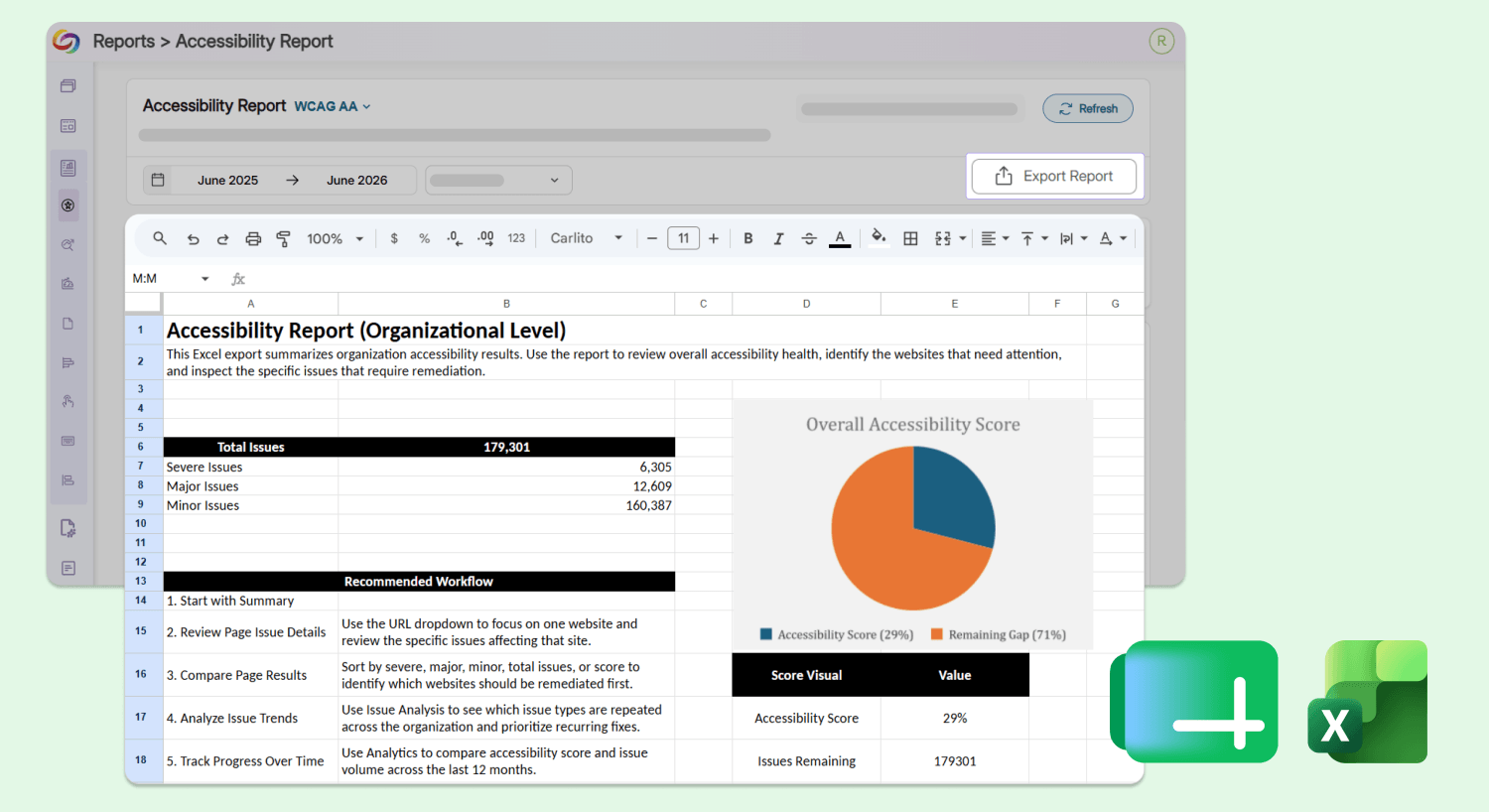
The report contains the following tabs:
Accessibility report summary: Users can view their organization’s accessibility statistics, including the total number of issues ranked by severity and a suggested workflow for remediation.
Issue breakdown: Users can view a breakdown of all issues found on a website that require remediation, including their severity level, type, description, associated WCAG principle, and the number of occurrences.
Score breakdown: Users can track the historical trend of their website’s accessibility score over the specified number of previous months.
Issues count: Users can track the total number of accessibility issues identified each month over the last few months.
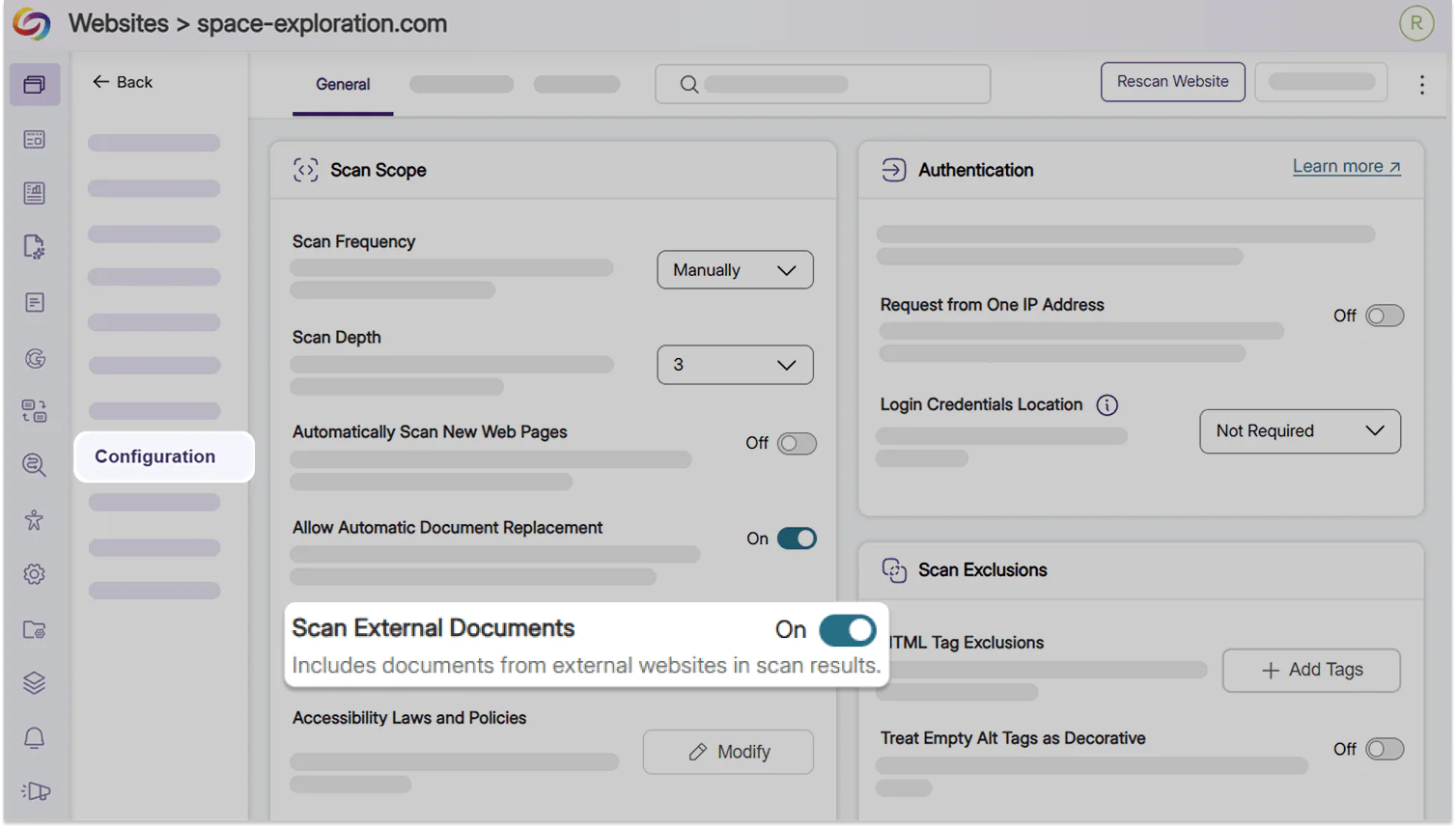
Scan and Remediate Documents from External Subdomains Using an Improved Document Discovery Workflow
YuJa EqualGround can now discover and scan documents hosted on related subdomains and entry points when documents are hosted outside of the primary website, so institutions get a complete, accurate picture of their accessibility progress and ensure that all of their documents are remediated.
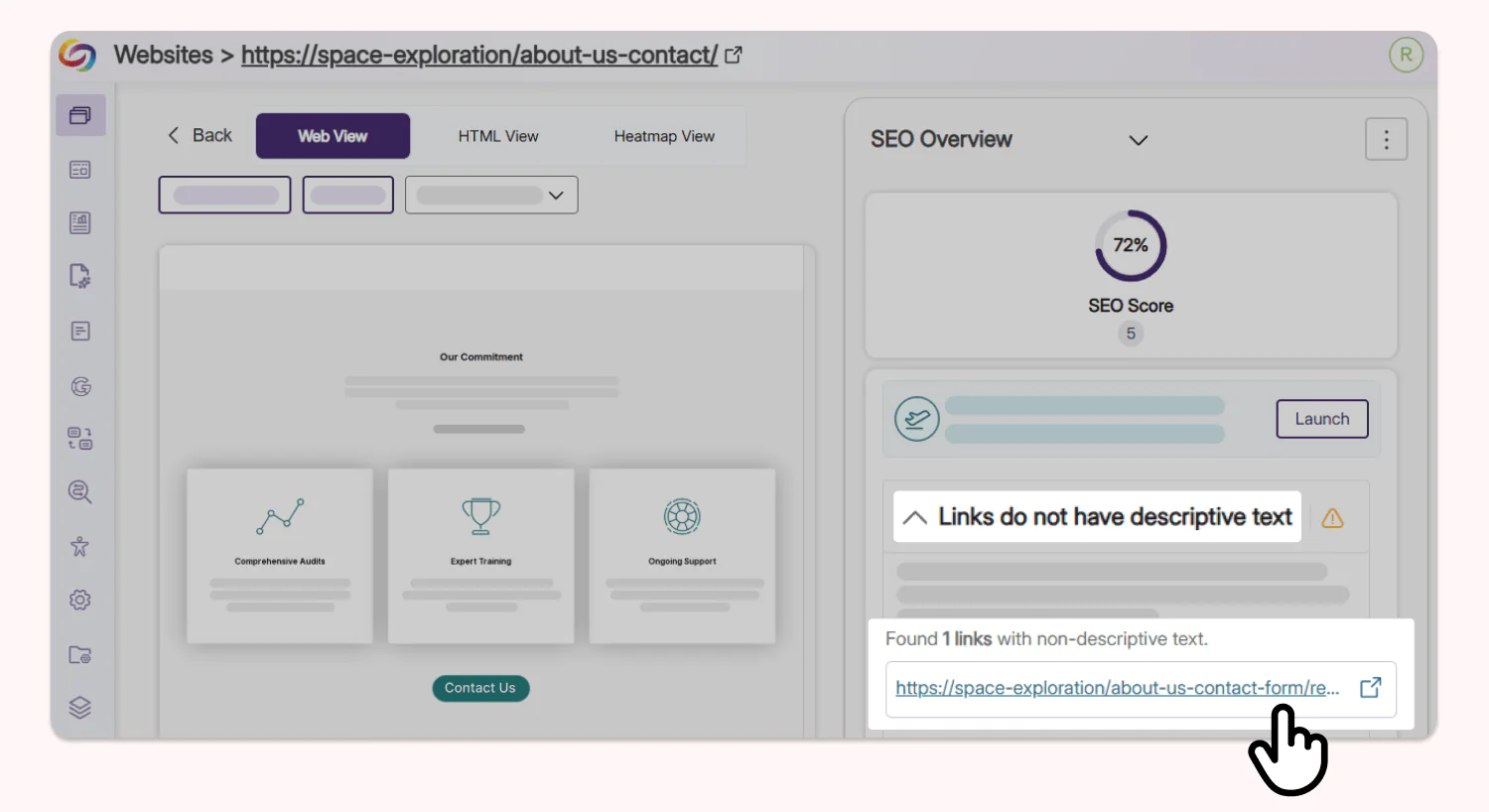
Find and Fix Unclear Link Text in One Click
Undescriptive links flagged by the YuJa EqualGround SEO Report are now clickable, directing users to the target landing page immediately so users can quickly add an effective description to remediate the issue without needing to search their codebase.
We are excited to introduce the new YuJa CivicGuard Document Remediation Platform. Designed specifically for state and local governments, YuJa CivicGuard offers a streamlined approach to remediating document libraries and content repositories using AI, fully human, and AI + human workflows.
Streamline Your Document Remediation Workflows with YuJa CivicGuard
YuJa CivicGuard enhances efficiency by centralizing access to vital platform tools, creating a more intuitive document remediation experience. Users can manage files effortlessly through a drag-and-drop upload interface and view the accessibility scores of recently handled documents at a glance. YuJa CivicGuard also features shortcuts to DocHub and the Workflow Orchestration App, improving overall workflow efficiency and access to essential platform tools.

Leverage DocHub to Help Bring Your Content to Compliance
YuJa CivicGuard’s DocHub interface functions as a centralized accessibility hub that enables its users to perform inline fixes with guided remediation workflows. Users can select the most appropriate remediation method for their specific documents, including AI-automated, fully human, or combined AI + human workflows. The interface also provides intuitive folder structures for organization and powerful filtering capabilities, in addition to complete remediation support that streamlines document library compliance.

Centralize Accessibility Project Management with the Workflow Orchestration App
Eliminate the need for a separate accessibility project management system with YuJa Workflow Orchestration. The app centralizes accessibility remediation projects and tasks in one user-friendly interface to give teams complete visibility into compliance progress. Set up dedicated accessibility improvement projects for different teams, campaigns, or initiatives within an organization to create a structured approach to remediation.

Elevate Video Accessibility Using the Video Compliance Player
YuJa CivicGuard’s new Video Compliance Player empowers users to enhance video assets through a comprehensive suite of accessibility tools, including video chaptering, captioning, and enhanced audio descriptions. These features work together to help create an inclusive and accessible experience for every viewer. This feature appears in a dedicated Video Compliance tab in the sidebar, seamlessly integrating into YuJa CivicGuard’s workflows. Users receive 5 hours of complimentary credits each month, with additional credits available for purchase.

Leverage the DocHub Report to Gain Accessibility Insights on Your Assets
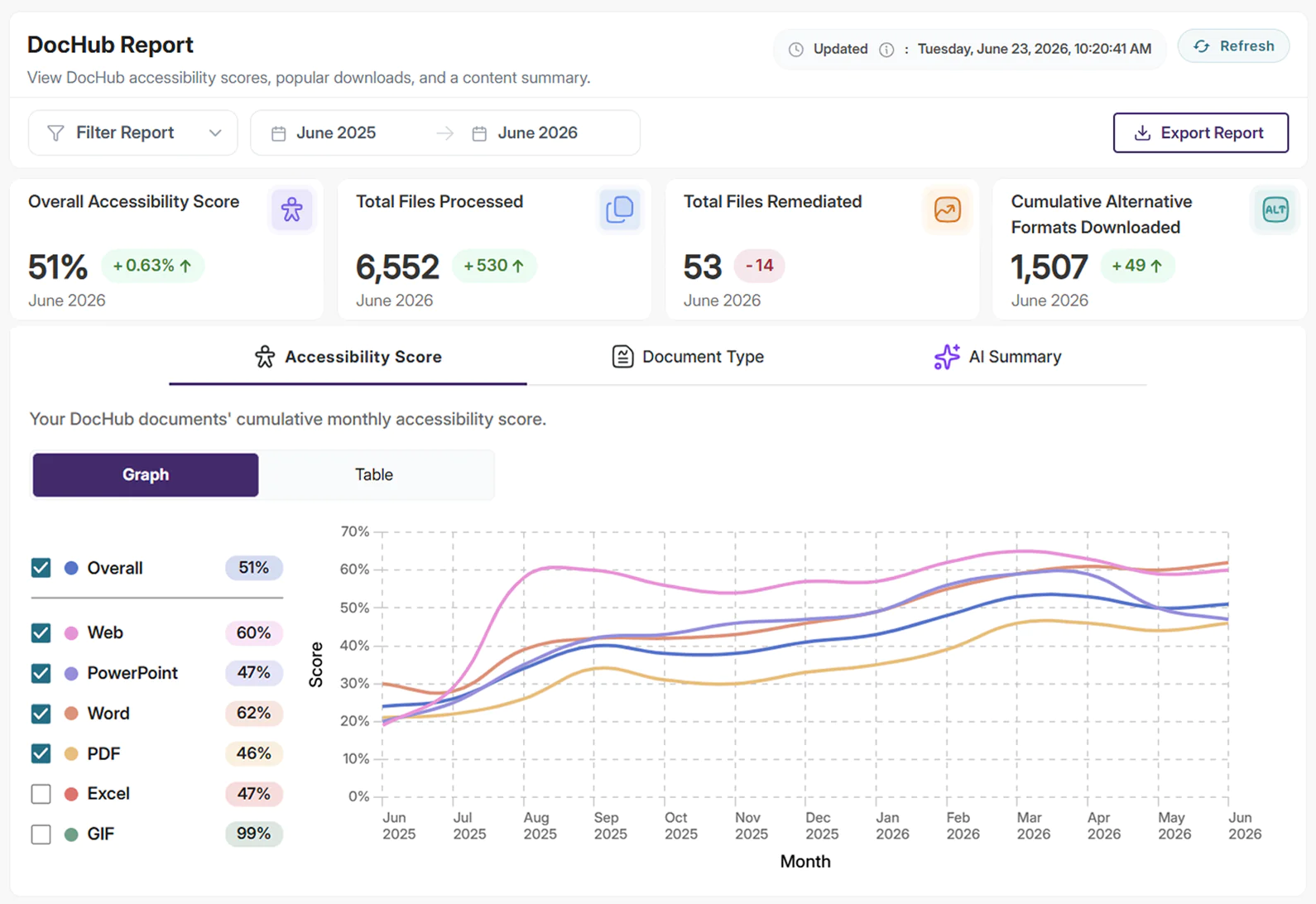
The DocHub Report provides critical insights by providing the overall accessibility score of a user’s asset library alongside granular accessibility score breakdowns for individual file formats. This data allows users to monitor progress and pinpoint the file types that require the most remediation. The report also provides a customizable date filter that enables users to refine their report scope, ensuring they can access the precise information they need.

In the coming weeks, the YuJa Panorama LMS Accessibility Platform will release a new DocHub Report, optimized workflows for issue remediation in Microsoft Word and PowerPoint, the ability to exclude terms from LMS Reports, and additional enhancements that simplify the management of LMS accessibility.
Leverage the New DocHub Report to Gain Accessibility Insights on Your DocHub Files
YuJa Panorama will now generate a new DocHub Report that details the overall accessibility score of a user’s DocHub library and their most popular downloads. The report provides date and account filters, allowing users to narrow the report scope to reflect the information they need most. Admins can also view each user’s DocHub usage within the report to help get a sense of storage usage across their organization.
View How Your Institution’s Accessibility Is Improving, Directly From Your Inbox
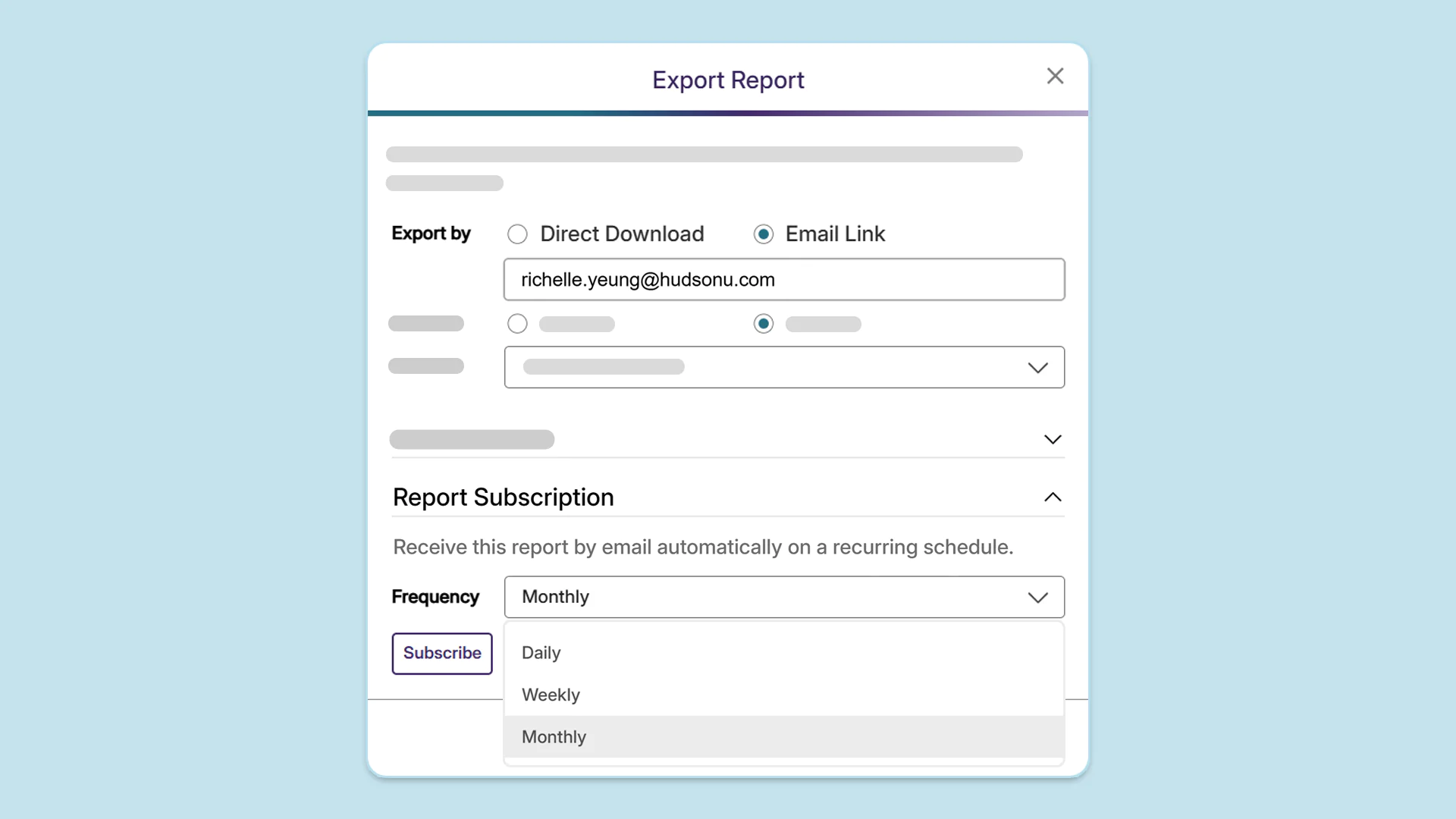
Users can now sign up to receive periodic emails summarizing all the YuJa Panorama Reports they’ve exported in a given period, removing the need to navigate between multiple emails. Users can choose to receive emails automatically on a recurring schedule:
Daily: A default RTMP stream session is now automatically added in YuJa Lumina when an institution has no existing streams, allowing instructors to start a session directly without needing to create a new stream.
Weekly: An email will be sent every Monday, covering the exported reports from the start of the month to the current day.
Monthly: An email will be sent on the first day of the month, covering the exported reports from the previous month.
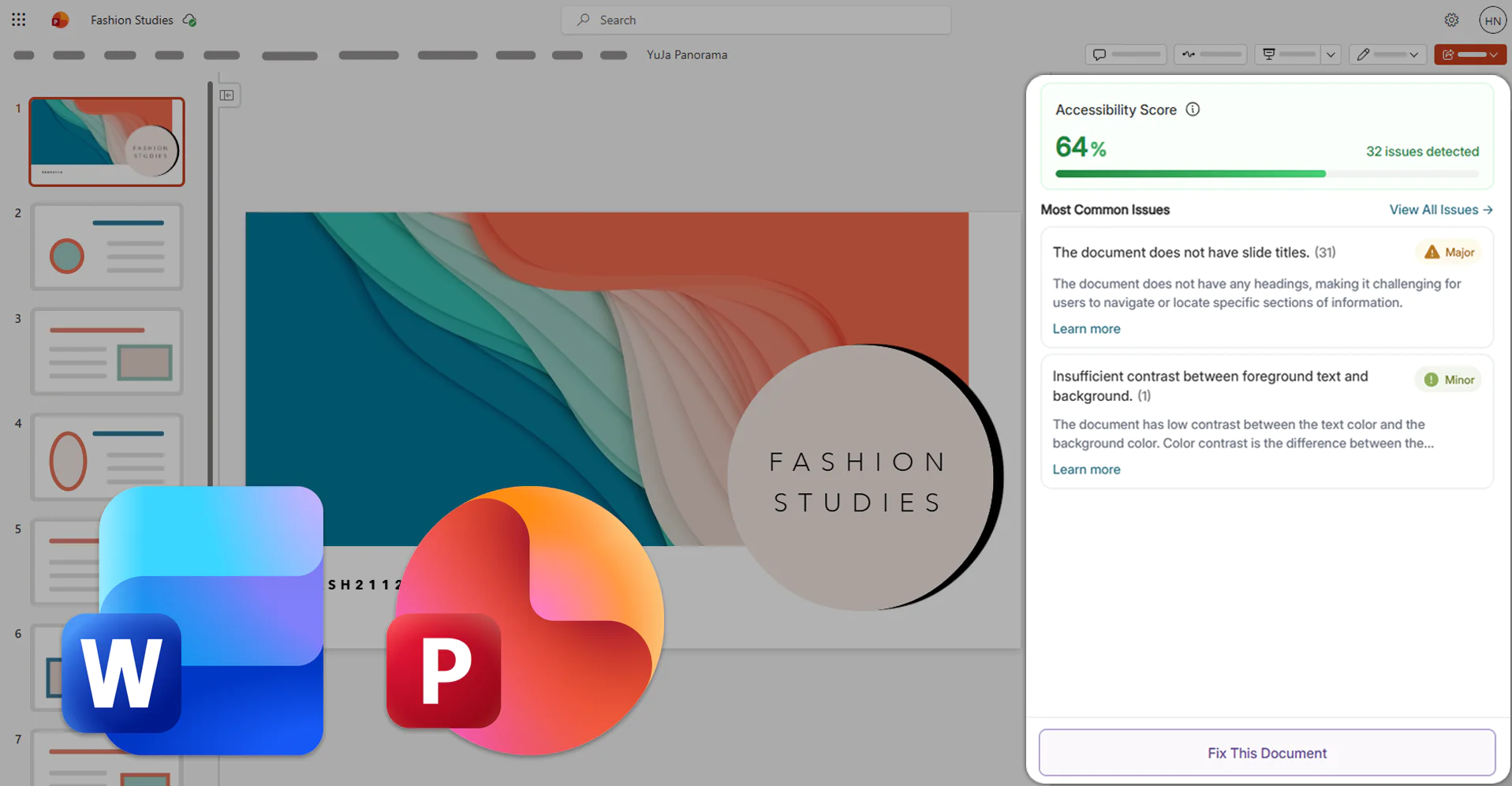
Optimize Issue Remediation in Microsoft Word, PowerPoint, and LMS WYSIWYG Editors Using the Redesigned Accessibility Report
The Microsoft Office 365 Add-in and LMS WYSIWYG Editor will update their Accessibility Report to feature a streamlined interface that offers intuitive access to essential remediation workflows, such as guided remediation with suggestions and AI-powered YuJa AutoPilot suggestions. With its sleek new interface, the Accessibility Report helps users quickly identify and prioritize the most critical accessibility issues within their documents.
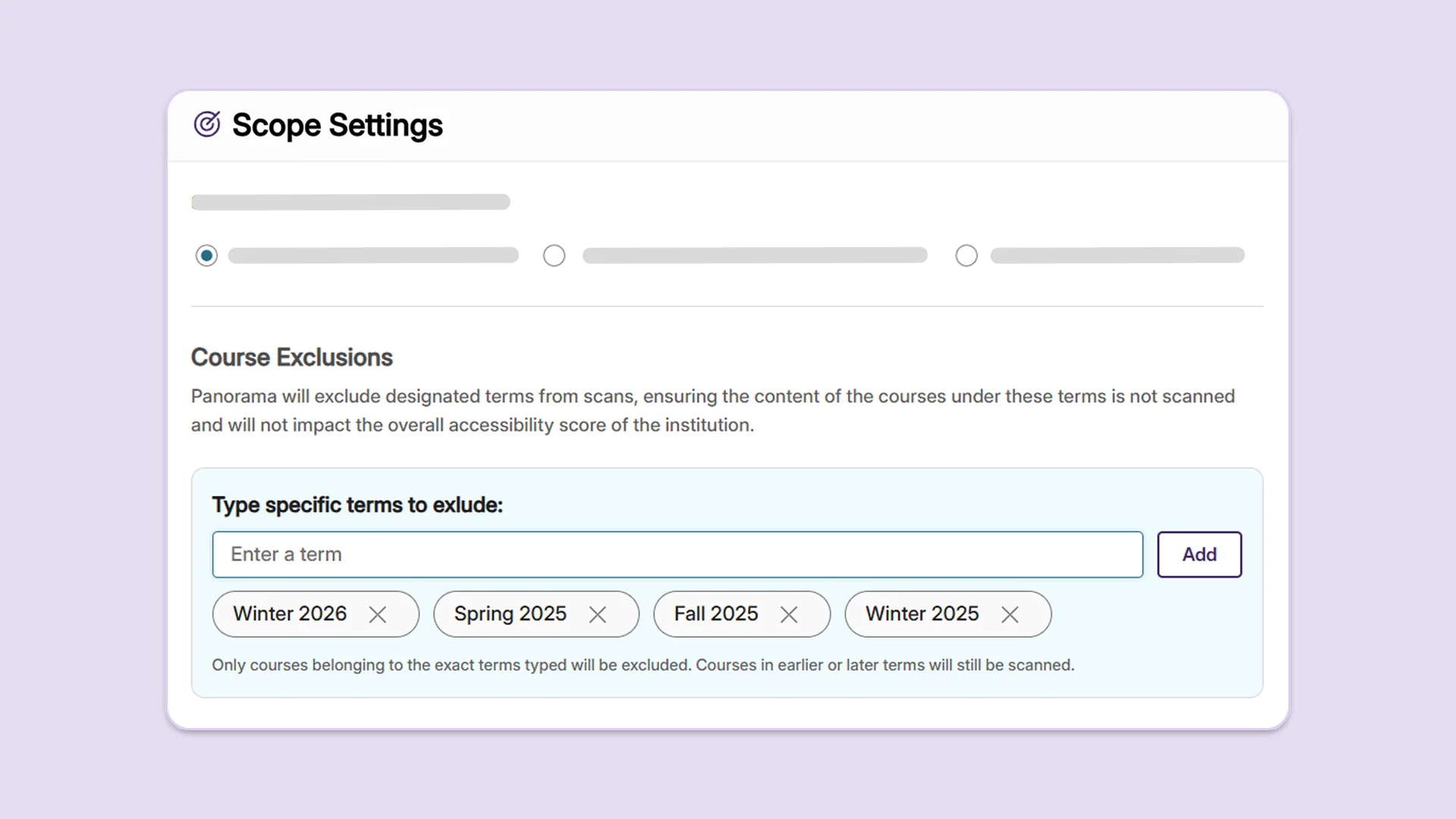
Ensure Your Institution’s Accessibility Score Is Up-to-Date by Excluding Previous and Prospective Terms from Scans
Administrators can now choose to omit previous and future terms from their scope settings to prevent courses in these terms from impacting the overall accessibility score of the institution. By excluding specific terms, administrators can ensure that their accessibility scores accurately reflect the current state of their institutions’ LMS content.
Track Accessibility Improvements Through a Document’s Complete Version History
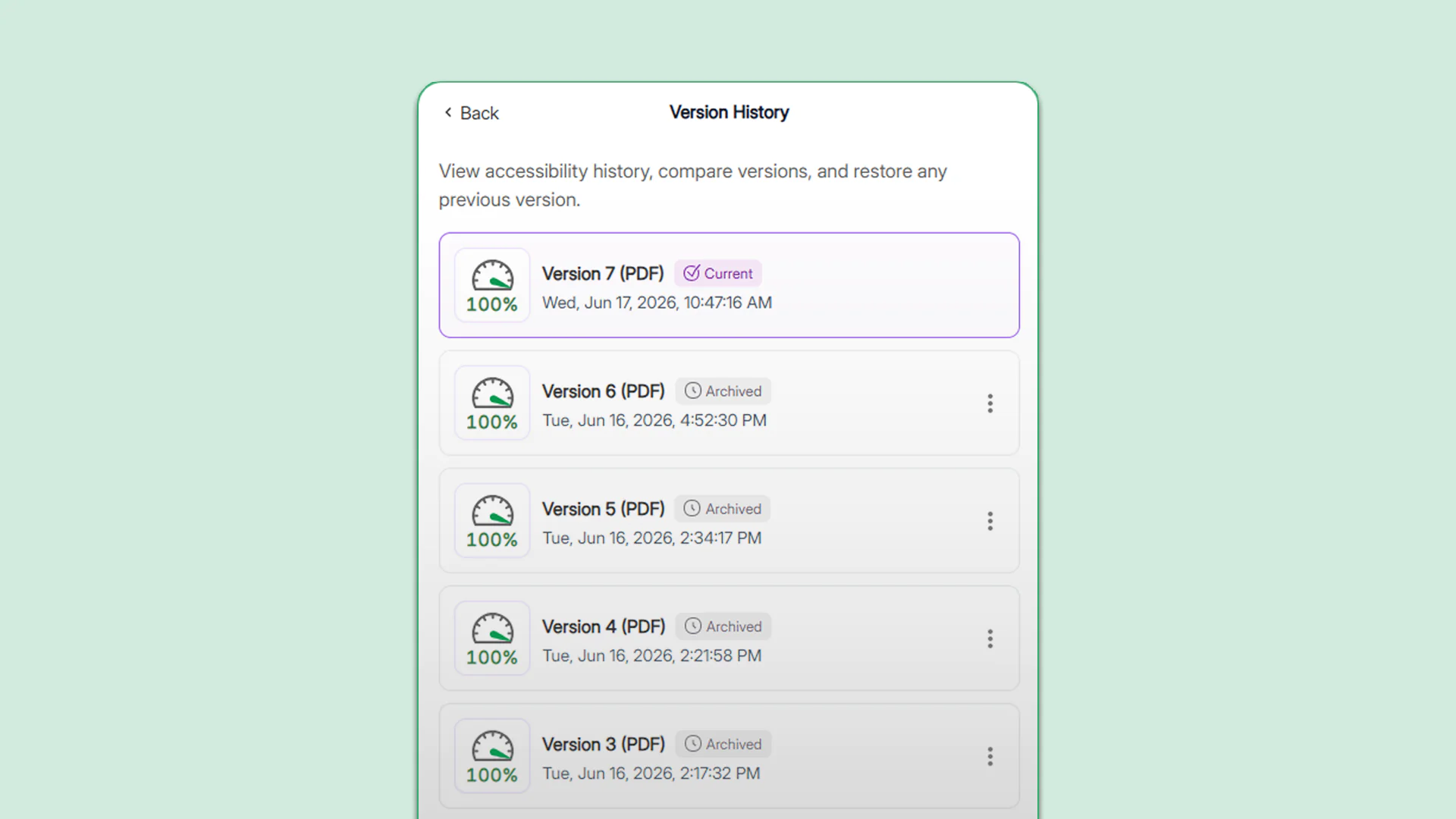
Users will now retain full access to their document’s version history, even after reprocessing a course, allowing them to track historic changes in document accessibility and restore previous versions. In the Version History panel, users will see their most up-to-date document marked as “Current” and previous versions included in prior course processing marked as “Archived” with precise timestamps to help identify the version.
Improve the Alignment of YuJa Panorama’s Issue Flags with Your Institution’s Compliance Goals
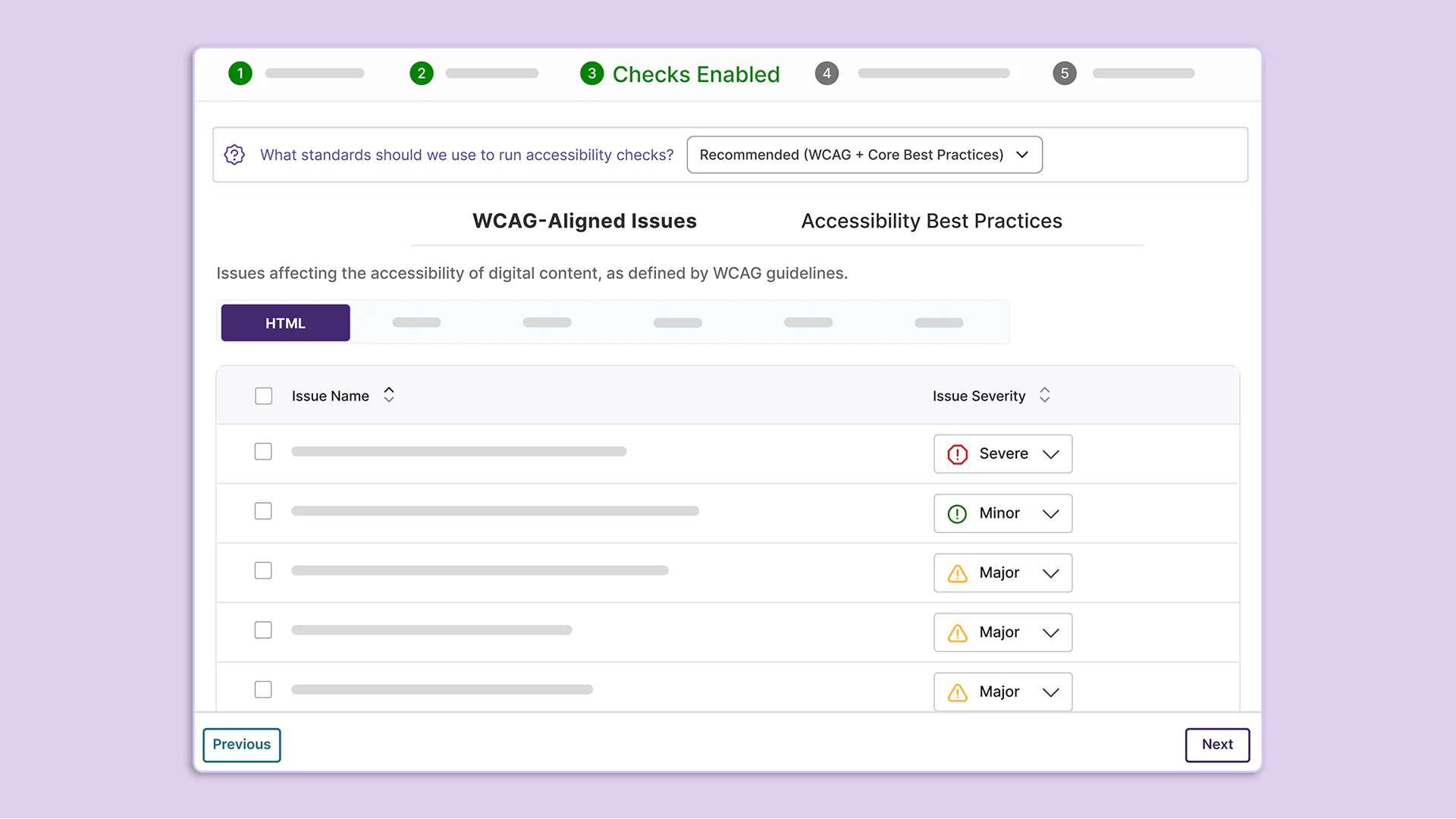
When an institution configures its Scoring Model, users will now be able to select what standards the platform should use to run accessibility checks. For institutions focusing on achieving WCAG compliance, this breakdown will help clearly delineate which issue flags should be prioritized. This breakdown can also be used to create customized issue severity levels that more accurately reflect an institution’s accessibility goals.
Institutions will be able to choose from the following three standards:
Essential: Includes checks that only align with WCAG guidelines.
Recommended: Includes all checks that align with WCAG guidelines and core accessibility best practices.
Comprehensive: Includes all checks that align with WCAG guidelines and all accessibility best practices.
YuJa Panorama will be launching a new Google Workspace Accessibility app in the coming weeks. This tool enables users to identify accessibility issues and remediate content directly within their Google Workspace files.
Introducing the New Google Workspace App to Help Make Google Drive Documents More Accessible
The YuJa Panorama Google Workspace Accessibility App now offers a seamless integration with Google Drive, including Docs, Sheets, and Slides. Help your institution create accessible files from the start by performing real-time accessibility scans based on your institution’s compliance standards, directly within the Google Drive interface.

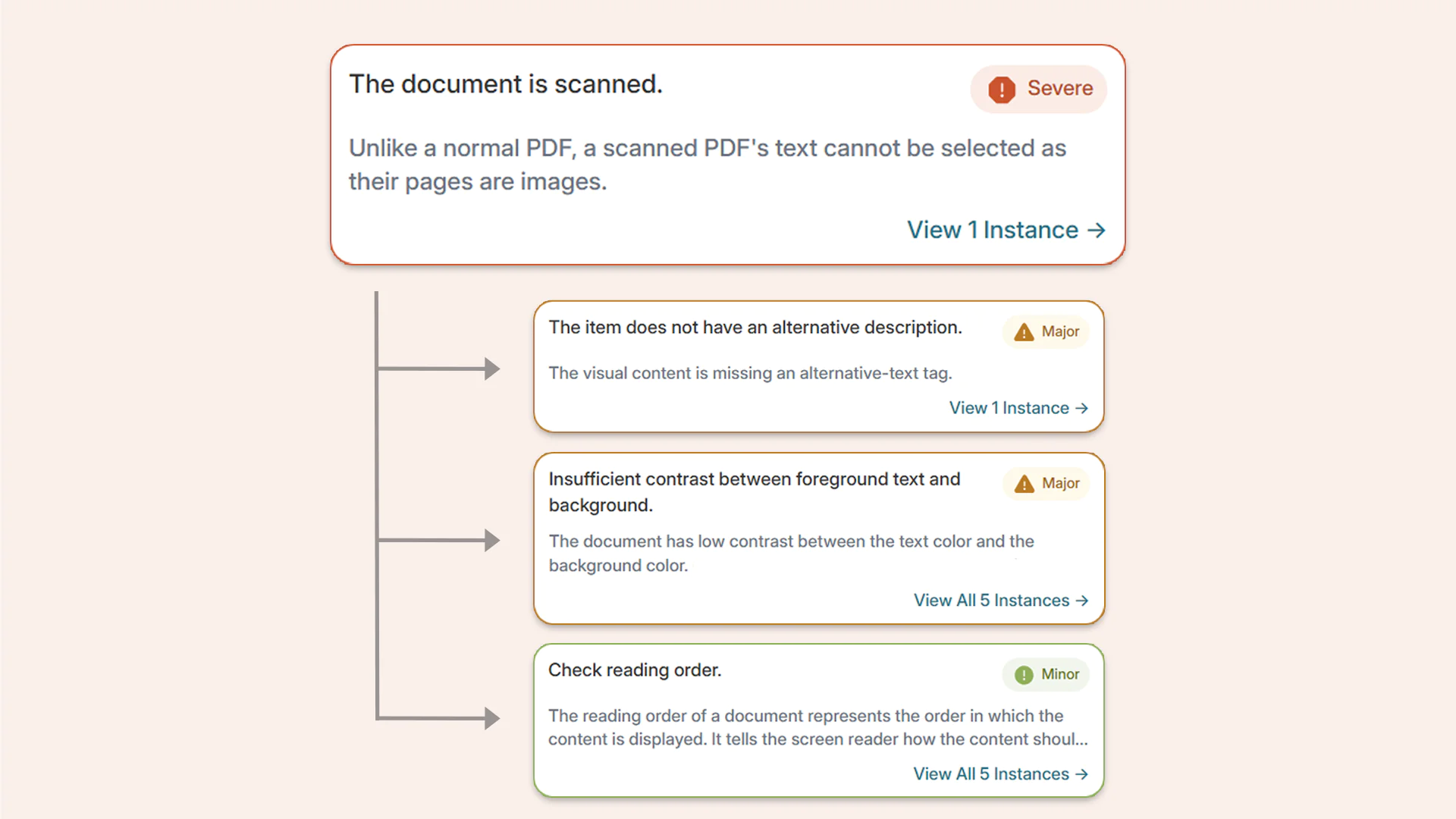
Over the next few weeks, YuJa AutoPilot will be improving its accessibility engine to increase the number of issues it can remediate and simplify the process of repairing scanned PDFs.
YuJa AutoPilot Now Provides Support for 20 New Accessibility Issues
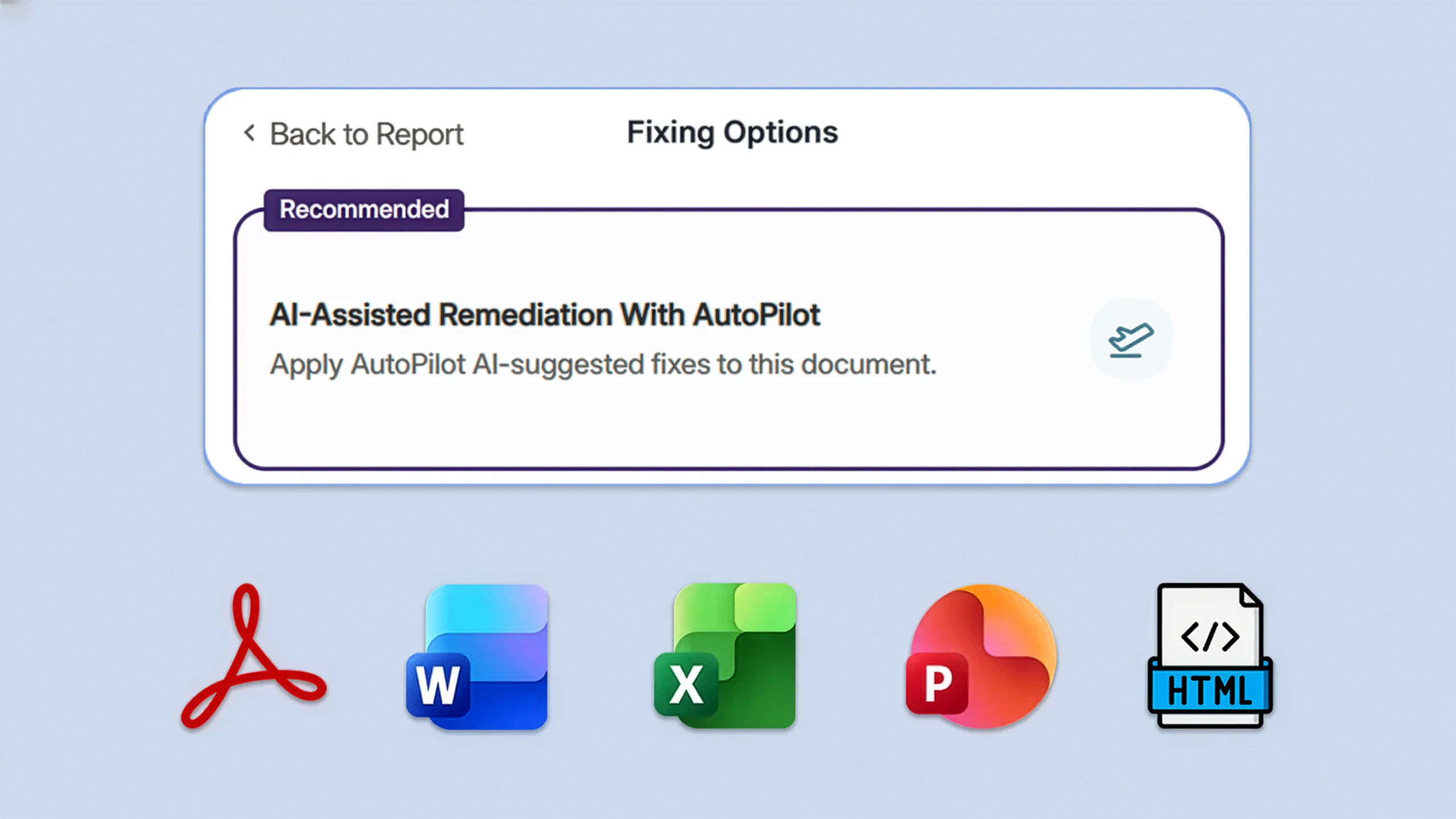
YuJa AutoPilot now provides automated remediation for new accessibility issues in DOCX, PPTX, PDF, HTML, and XLSX documents. New issues that AutoPilot can resolve in these document types include: missing document titles, incorrectly set document language, undescriptive hyperlink text, and missing table captions. For a full list of accessibility issues that can be addressed with YuJa AutoPilot, please refer to Panorama’s Accessibility Checklist, which will be updated as new support is released.
Simultaneously Resolve Multiple Accessibility Issues in Scanned PDFs with One Click
The process for remediating accessibility issues in scanned documents is now streamlined so users can resolve multiple issues with just one click. While the platform is repairing a scanned, untagged, or malformed PDF, it will also simultaneously resolve any other YuJa AutoPilot-supported accessibility issues that are found after the document has been repaired. This streamlined process reduces the effort required to make documents fully accessible while saving valuable time for users.
Join the 1,000+ Organizations Deploying High-Impact Solutions
